
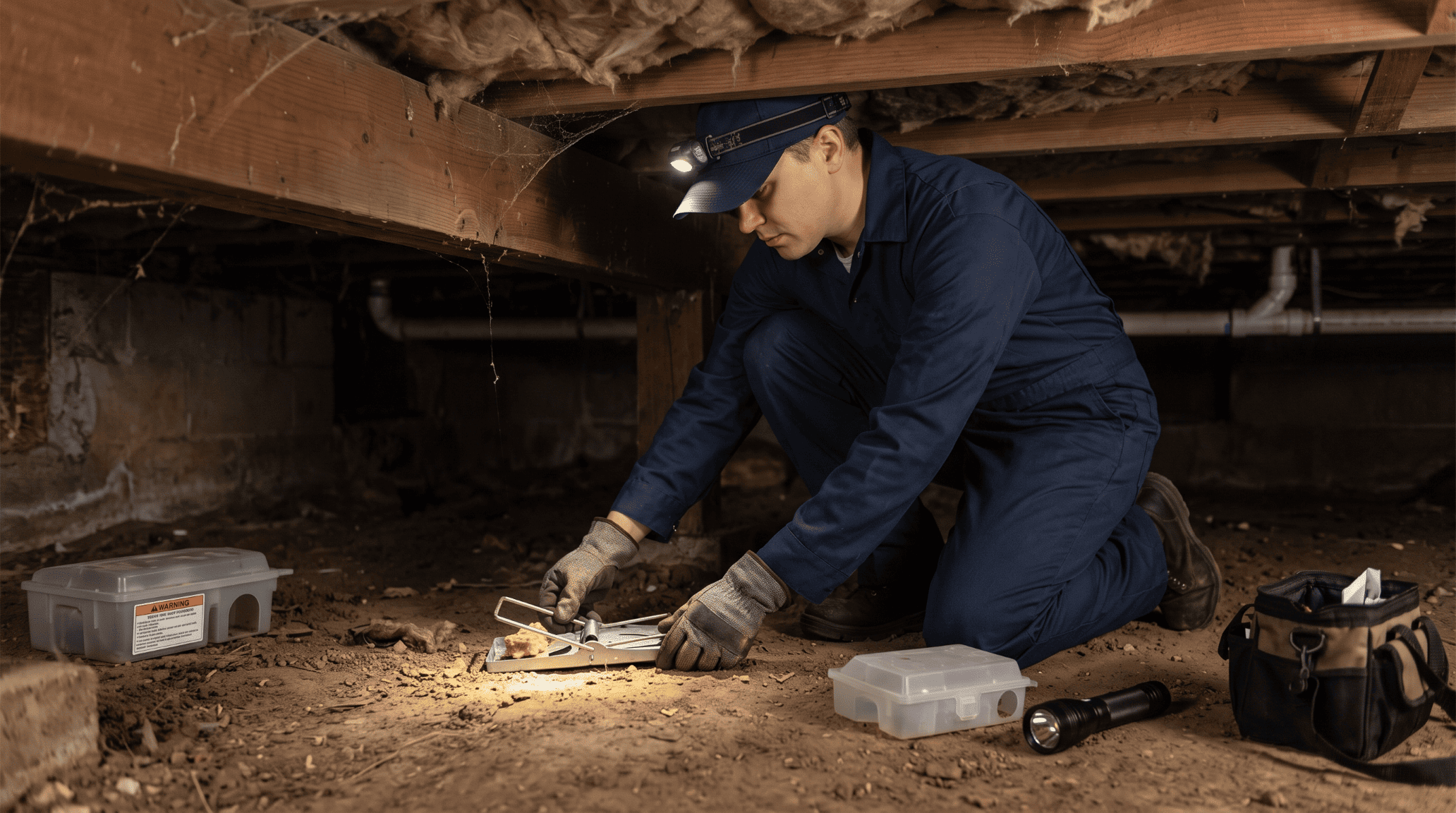
Rodent Control
Systematic 4-visit rodent trap program for Bangalore homes — multiple professional trap types deployed and monitored, chemical-free and safe for kids & pets.
What's Included
- Complete rodent control starting with a thorough entry-point inspection. We deploy customized trapping methods tailored to your property and ensure total elimination with up to 4 dedicated follow-up monitoring visits.
This service is priced after a free on-site inspection — fill in your details below and our team will call you with a quote.
Property Type
Property Size
What's Included
- Complete rodent control starting with a thorough entry-point inspection. We deploy customized trapping methods tailored to your property and ensure total elimination with up to 4 dedicated follow-up monitoring visits.
Payment Summary
Why a 4-Visit Trap Program, Not a One-Time Treatment
Rodent activity rarely stops after a single visit — traps need to be checked, reset, and repositioned based on where activity is actually happening, not just where it was first spotted. Our 4-visit program deploys multiple trap types on the first visit across all active zones, then uses three monitoring visits to check, remove trapped rodents, and adjust placement, confirming the infestation is fully cleared rather than just temporarily reduced.
Why Trap-Based, Not Poison-Based?
Rodenticide-based treatments carry a real downside: a poisoned rodent often dies inside a wall void, ceiling, or other inaccessible space, leading to odour problems that can take weeks to resolve. A trap-based approach means every rodent dealt with is physically removed during a monitoring visit — no chemical residue near food storage, and no risk of a decomposing rodent in a space you can't reach.
Signs of a Rodent Infestation
Common signs include droppings (small, dark, pellet-shaped) near food storage or along walls, gnaw marks on packaging, wiring, or wood, a persistent musty odour, and scratching sounds in walls or ceilings — usually most active at night. If you notice any of these, an inspection will confirm the extent of the activity and the best trap placement for your property.
Similar Services You Might Like









Questions & Reviews
IPest offers fast rodent control with same-day slots when available. Treatment includes snap traps, glue boards, and tamper-resistant bait stations at entry points and rodent runways. We also provide rodent-proofing advice to prevent future infestations.
Multiple trap types are deployed on the first visit across all active rodent zones. The next three visits check, remove trapped rodents, and reset traps based on where activity is actually continuing — a single visit can't confirm the infestation is fully cleared.
Yes. We use snap traps, glue boards, and tamper-resistant bait stations — no rodenticide or poison bait. This avoids the risk of a poisoned rodent dying inside an inaccessible wall void.
Yes. Since we don't use any chemicals or poison, there's no residue risk near food preparation or storage areas — traps and bait stations are placed at entry points and runways, not on food surfaces.
Rat droppings are larger (roughly the size of a grain of rice or bigger) and gnaw marks tend to be more pronounced, while mice leave smaller droppings and can fit through much smaller gaps. Our technician identifies the species during the first visit, which affects trap placement and type.
Our 4-visit trap program starts from ₹2,500, covering the initial deployment and all three monitoring visits. Exact pricing depends on property size — call +91 7411032320 for a quote, and you pay only after service.
Monitoring visits are typically spaced about a week apart, giving traps enough time to catch activity while keeping the overall program moving quickly to full resolution.
Yes. Along with the 4-visit trap program, our technician identifies likely entry points — gaps around pipes, doors, and vents — and advises on sealing them, since trapping existing rodents without closing entry points just invites new ones in.