
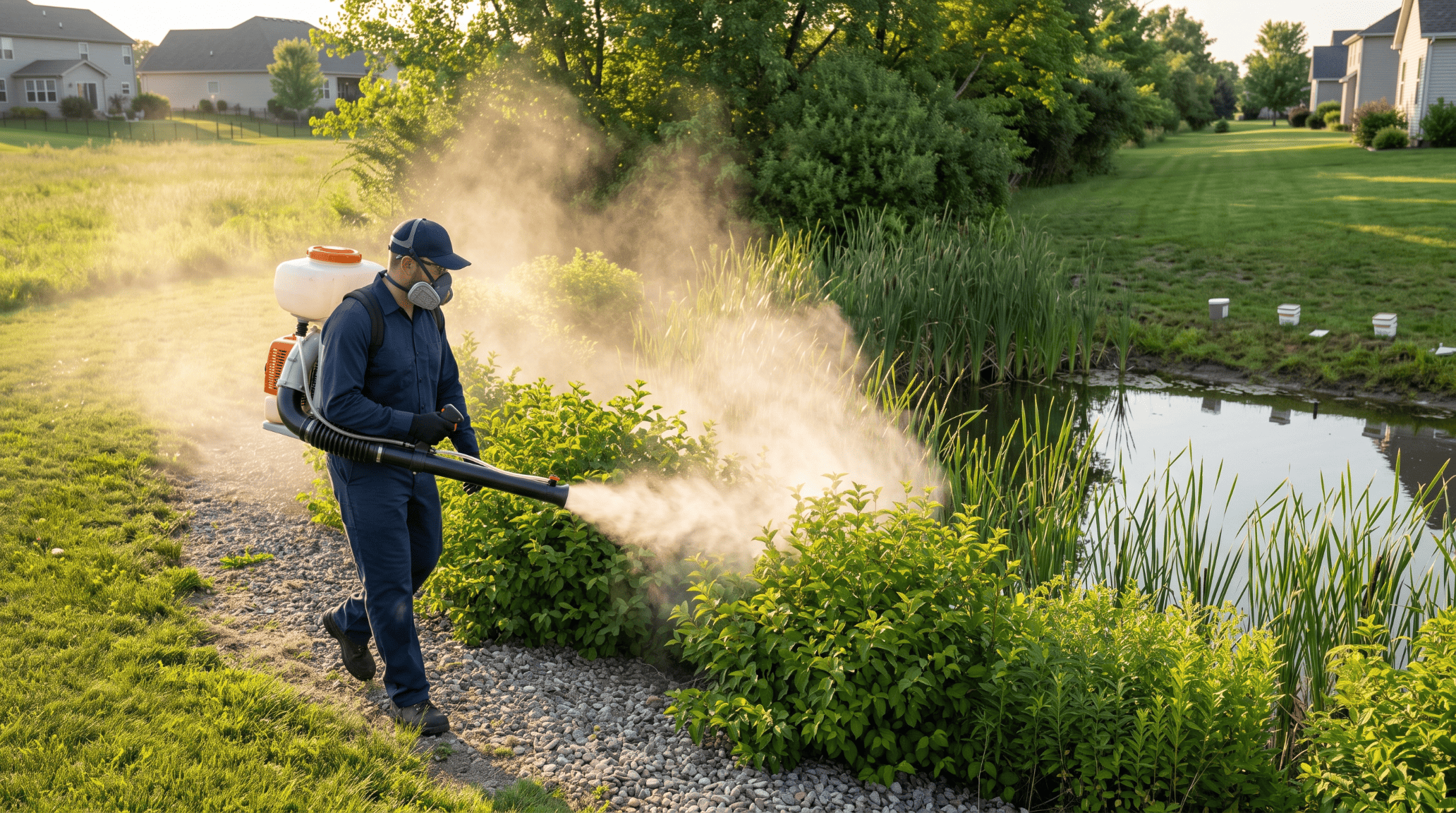
Mosquito Control
Wall-to-wall residual spray mosquito treatment for Bangalore homes — effective up to 15 days, no need to vacate, CIB&RC-registered and safe for kids & pets.
What's Included
- Complete mosquito defense featuring indoor and outdoor wall-to-wall residual spraying. We actively identify and eliminate exterior breeding sources to break the life cycle and create a lasting protective barrier around your home.
This service is priced after a free on-site inspection — fill in your details below and our team will call you with a quote.
Property Type
Property Size
What's Included
- Complete mosquito defense featuring indoor and outdoor wall-to-wall residual spraying. We actively identify and eliminate exterior breeding sources to break the life cycle and create a lasting protective barrier around your home.
Payment Summary
Why Wall-to-Wall Residual Spray Works Better Than Fogging Alone
Fogging kills only the mosquitoes present in the air at the exact moment of treatment — once the mist settles, it offers no further protection. Wall-to-wall residual spray works differently: it treats the surfaces mosquitoes land on to rest, so any mosquito that touches a treated wall, ceiling, or corner in the days afterwards is eliminated. That's why residual spray remains effective for up to 15 days, while fogging alone needs to be repeated constantly to have any lasting impact.
Dengue, Chikungunya & Malaria in Bangalore
Aedes mosquitoes, active mainly during the day, transmit both dengue and chikungunya and breed in small amounts of clean standing water — even a blocked terrace drain or a plant saucer is enough. Anopheles mosquitoes, which transmit malaria, tend to breed in more stagnant, often dirtier water near construction sites and drains. Both are present across Bangalore year-round, with case numbers typically rising during and after the monsoon.
How Long Does Mosquito Control Last?
A single wall-to-wall residual spray treatment stays effective for up to 15 days. For ongoing protection through the monsoon and post-monsoon months, many households and apartment complexes opt for a recurring treatment plan rather than a one-time visit — ask about our AMC options when you book.
Similar Services You Might Like


Questions & Reviews
IPest offers mosquito control for homes, apartments, and gated communities. Treatment includes anti-larval spray for drains and water bodies, residual spray on walls and vegetation, and outdoor fogging. Especially recommended before and during the monsoon season.
Our wall-to-wall residual spray stays effective for up to 15 days. Mosquitoes that land on any treated wall, ceiling, or corner during that period are eliminated, not just the ones present at the time of spraying.
Fogging only kills mosquitoes in the air at the moment of treatment and needs frequent repeating. Wall-to-wall residual spray treats the surfaces mosquitoes rest on, so it keeps working for up to 15 days after a single visit. We use residual spray as the primary treatment, with fogging as an add-on for immediate relief in gardens and open areas.
No. Residual spray is applied to walls, ceilings, and corners, not sprayed as an open-air fog through the house — you can stay at home during and after treatment.
Yes. We use CIB&RC-registered chemicals applied in a controlled, targeted way. Treated surfaces are safe to touch once dry, usually within an hour — our technician will confirm before leaving.
Yes. Along with wall-to-wall residual spray, we treat standing water sources — rooftop tanks, terrace drains, plant saucers — with larvicidal treatment, since spraying alone without addressing breeding sites only gives short-term relief.
Yes. Many households and apartment complexes book a recurring treatment plan for ongoing protection through the monsoon and post-monsoon months, rather than a single one-time visit. Ask about AMC options when you call.