Mosquitoes Around Apartment Swimming Pools, Fountains and Water Features
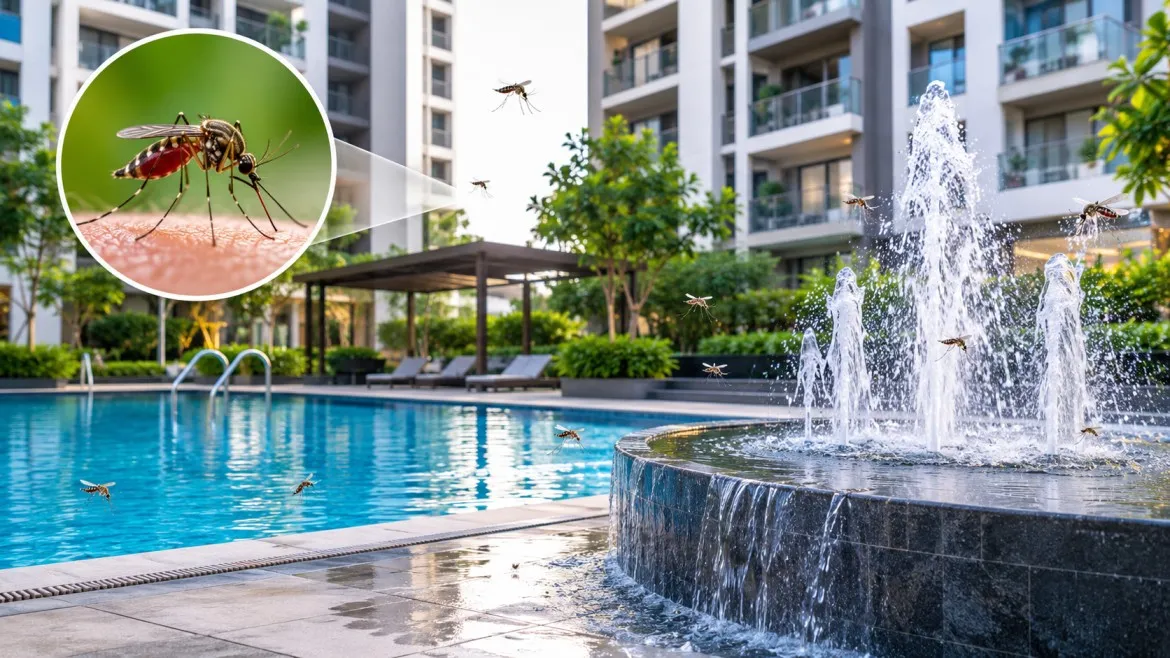
A clubhouse swimming pool, a landscaped fountain at the entrance and a lily pond in the central courtyard are some of the most attractive features of a modern Bangalore apartment community. They are also, if neglected, some of the most productive mosquito breeding sites in the building. Residents notice the first signs in the evening, when clouds of tiny insects gather around the poolside seating, children come back from the play area with fresh bites and the walkway beside the fountain suddenly becomes unpleasant after sunset.
The confusing part is that most people assume mosquitoes cannot breed in a swimming pool because the water contains chlorine. That is true for a pool that is properly maintained, circulating and disinfected, but pools are only one part of the problem. Closed or unused pools, covers holding rainwater, balance tanks, overflow channels, switched-off fountains, decorative bowls, planters and blocked deck drains all hold still water, and still water is all a mosquito needs. This guide explains how mosquitoes use pools and water features, which species are involved, how to inspect your community step by step, what housing societies, facility managers and residents can do, which control methods are appropriate and which should be left to professionals, and what to watch for in terms of health.
The short answer: still water, not the pool itself, is the problem
Mosquitoes need standing water for about a week or so to complete their development from egg to adult. A properly chlorinated, filtered and circulating swimming pool is not a good breeding site, but almost everything around it can be: pool covers with pooled rainwater, unused or half-empty pools, green or neglected water, overflow and balance tanks, deck drains, planters and decorative features that have stopped running. The solution is a weekly inspection routine, removal or treatment of still water, keeping fountains and water features running or drained, fixing drainage, using appropriate larvicides applied by professionals and involving residents in reporting problems. Adult mosquito control, such as fogging, only gives short-term relief and does not replace removing breeding sites.
How mosquitoes breed around pools and water features
Female mosquitoes lay eggs on or near still water. The eggs hatch into larvae, commonly called wrigglers, which hang just below the water surface and breathe through a small tube. After several days they become pupae, and within a few more days an adult mosquito emerges. In warm weather, the whole cycle from egg to adult can take roughly seven to ten days, which is why a weekly inspection routine works and a monthly one does not.
- Still, shaded or sheltered water is preferred, because it is calm and safe from disturbance.
- Small volumes are enough. A bottle cap, a saucer under a plant or a drain sump can produce adults.
- Organic matter helps. Leaves, algae and debris feed larvae and make water more attractive.
- Moving or disinfected water is disrupted. Circulation and proper disinfection prevent larvae from developing, which is why failure of either is the problem.
Which mosquitoes are involved
Aedes
Aedes mosquitoes, particularly Aedes aegypti, breed in small, clean containers of water: decorative pots, trays, buckets, tyres, planters and fountain bowls. They bite mainly during the day, with peaks in early morning and late afternoon, and are the main carriers of dengue, chikungunya and Zika. Their breeding sites are often around homes, courtyards and decorative features.
Culex
Culex mosquitoes prefer stagnant, polluted or organically rich water such as blocked drains, sumps, neglected ponds and flooded basements. They bite mostly at dusk and through the night and are a major nuisance. They are strongly associated with poor drainage and neglected water.
Anopheles
Anopheles mosquitoes can breed in clean, still water, including storage tanks, cisterns, construction sites and neglected water bodies. Some species are carriers of malaria, and the urban malaria vector found in Indian cities is known for breeding in overhead tanks and similar containers. Anopheles tend to bite at night.
The mixture differs from one community to another, but a pool, fountain and landscape area can host all three groups in different corners. Identifying the species is a job for professionals, but the control principle is the same: remove or treat still water.
Hidden breeding sites around pools and water features
- Pool covers: Rainwater collects in folds and low spots on covers and sits for days.
- Closed or unused pools: Pools shut for monsoon, repairs or low usage turn green and become productive within days.
- Balance tanks, surge tanks and equipment room sumps: Out of sight and rarely checked, with standing water.
- Overflow channels and gutters: Leaves and sediment hold water in the channels around the pool.
- Deck drains and poolside drainage: Blocked or slow drains collect puddles.
- Fountains and cascades switched off: A fountain that is not running becomes a still pond.
- Decorative bowls, urns and ornamental pots: Common sources of Aedes.
- Lily ponds and water features with no maintenance: Plants, algae and debris offer food and shelter.
- Planters and plant saucers near the pool: Overwatered pots and trays hold water.
- Poolside showers and foot-wash areas: Pooled water on and around floors.
- Storage items: Buckets, tools, tarpaulins and equipment boxes that collect rainwater.
- Roof and terrace features: Rooftop water features, sunken planters and open tanks.
Signs that mosquitoes are breeding around your pool or water feature
- Wrigglers, tiny moving specks hanging at the surface of still water, which dart down when disturbed.
- Pupae, which look like tiny commas and tumble when disturbed.
- Adult mosquitoes resting on shaded walls, under furniture, in plant foliage and around pump rooms during the day.
- A cloud of small insects at dusk near the water feature.
- Residents reporting bites around the pool area or the courtyard at specific times of day.
- Green or cloudy water in a pool or pond that is not being maintained.
- Pooled water on covers, in drains or on decks days after rain.
Why it matters: health, comfort and community responsibility
Mosquitoes in residential communities are a public health issue, not just a comfort issue. Aedes can transmit dengue and chikungunya, Anopheles can transmit malaria and Culex can cause severe nuisance. One breeding site can supply mosquitoes to hundreds of homes within flight range, and cases in one building can spread through a neighbourhood. Children, elderly residents, pregnant women and people with other health conditions can be particularly vulnerable.
If anyone develops fever, severe body ache, headache, rash, vomiting or other concerning symptoms, they should see a doctor promptly instead of relying on home remedies or self-medication, and should tell the doctor about mosquito exposure. Communities also have practical and legal responsibilities. Civic and health authorities can take action against premises that allow mosquito breeding, so it is in every association's interest to deal with problems early.
Safety first: what should not be done
- Do not add insecticides or larvicides directly to a swimming pool or drinking water source yourself. Pool water and drinking water need professional guidance and approved products only.
- Do not rely on fogging as the main method. Fogging kills adults for a short time but leaves larvae untouched, and repeated fogging without source removal is wasteful.
- Do not release fish or other animals into water bodies without expert advice. Some fish are used for larval control in suitable ornamental ponds, but introducing non-native species into drains, lakes or natural water is harmful and unlawful in many places.
- Do not spray chemicals around children's play areas or seating at times of use. Treatments should be timed, sited and carried out by trained professionals following label directions.
- Do not ignore small containers. A few bowls and pots can sustain mosquitoes around a whole courtyard.
- Do not mix pool chemicals or cleaners carelessly. Pool operators should follow their standard procedures and safety guidance.
- Do not drain water into open drains and leave it standing. Drain it into proper sewer or stormwater connections or dispose of it where it cannot pool.
A weekly inspection routine for communities: step by step
The most effective approach in an apartment community is a short, regular inspection by the facility team, backed by a written checklist and photographs. This takes less than an hour for most complexes.
- Choose a fixed day each week and assign a named person from the facility or housekeeping team.
- Inspect the pool: Check that water is clear, circulation and filtration are working and disinfectant levels are being maintained according to the pool operator's logs.
- Check pool covers, tarpaulins and covers on equipment: Lift, shake or drain any rainwater and make sure covers drain properly.
- Inspect unused or closed pools: Either keep them filled, circulating and treated, or drain them fully and keep them dry, with drains clear.
- Look into balance tanks, sumps and equipment rooms: Check for standing water and larvae, and cover openings with fine mesh where practical.
- Walk the deck, overflow channels and drains: Remove leaves and debris, and fix any areas where water collects.
- Check fountains and cascades: Keep them running during the day or drain and dry them if they will be off. Clean basins and remove algae.
- Empty and invert decorative bowls, urns and containers or fill them with sand or soil if they are only decorative.
- Inspect planters, saucers and gardens: Empty plant saucers, avoid overwatering and level hollows that hold puddles.
- Check the roof, terraces and gutters for pooled water, blocked drains and open tanks.
- Record findings with photos and dates, note any wrigglers found and the action taken, and share the log with the committee.
- Brief residents: Remind them to empty pots, trays and containers on balconies every week, and provide a number or form for reporting breeding spots.
Control methods: what is appropriate and who should do it
Source reduction
This is the foundation. Remove, drain, cover or level water-holding spots, repair drainage and maintain pools and fountains properly. No chemical programme works well without it.
Water management
Keep pools clean, filtered and circulating, run fountains regularly, drain and dry unused features and avoid overwatering. Moving water and good hygiene prevent larvae from developing.
Biological and professional larviciding
Where water cannot be removed, such as ornamental ponds, sumps and balance tanks, professionals may apply approved larvicides, including biological products that target mosquito larvae, using methods and dosages that suit the water body and its use. Ornamental ponds may sometimes use mosquito-eating fish, but this should be decided with expert advice and never involve releasing fish into natural or public water.
Physical barriers
Fine mesh on tank vents and openings, tight lids on containers and covers that drain properly stop mosquitoes laying eggs in them.
Adult mosquito control
Targeted treatment of resting areas such as shaded walls, shrubs and under-seat spaces, and occasional fogging in outbreak conditions, can reduce adult numbers for a short period. These are supporting measures, carried out by trained staff with attention to timing, wind, residents and children, and are never a substitute for removing breeding sites.
Personal protection
Residents can use repellents recommended by a doctor or pharmacist, wear long sleeves in the evening, use screens on windows and doors and avoid sitting near still water at peak biting times.
Roles and responsibilities in an apartment community
- Managing committee: Sets policy, approves a budget for regular inspection and professional treatment and ensures records are kept.
- Facility manager and housekeeping team: Carry out the weekly checklist, fix drainage and water-holding problems and coordinate with contractors.
- Pool and water-feature operators: Maintain circulation, disinfection and cleaning, and report problems.
- Pest control contractor: Inspects, identifies species, applies approved larvicides and adulticides where needed and gives written recommendations.
- Residents: Empty containers on balconies and terraces, report problems and cooperate with inspections.
- Civic and health authorities: Provide guidance and enforcement and should be informed of suspected disease clusters.
Bangalore-specific factors
Bangalore's monsoon season, from roughly June to September, brings frequent rain that fills covers, channels, planters and containers, and the cooler months can still allow mosquito breeding in shaded, sheltered spots. Many community pools are used less during the monsoon or closed for maintenance, and an unattended pool can turn from a clear pool to a breeding pond in a week or two. Landscaped courtyards with fountains, cascades and ornamental ponds are popular in newer developments, and they need active management, not just installation.
Construction activity around the city, basements that collect water, rooftop and terrace gardens and nearby lakes and drains all add to local mosquito pressure, so even a well-run community may receive mosquitoes from outside. This is another reason to combine in-building source reduction with coordination across the neighbourhood. If you see stagnant water in a public drain, vacant plot or construction site nearby, report it to the appropriate civic body with photographs and exact location.
Myths about mosquitoes and pools
- "Chlorinated pools cannot breed mosquitoes." A well-run, circulating pool generally does not, but covers, overflow channels, balance tanks and neglected pools can.
- "Fogging solves the problem." Fogging kills some adults for a short time and does nothing about larvae in the water.
- "Mosquitoes breed only in dirty water." Aedes and Anopheles often breed in clean water, and Culex prefers polluted water, so any still water can be a site.
- "A few small containers do not matter." A saucer or bottle cap of water can produce adult mosquitoes within days.
- "Mosquitoes only bite at night." Aedes bites during the day, and the others peak at dusk and during the night.
- "If we have a pest contract, we do not need inspections." Contracts help, but regular in-house inspections catch problems between visits.
Common mistakes to avoid
- Leaving a closed pool full of unmanaged water through the monsoon.
- Switching off fountains and water features without draining them.
- Relying on fogging with no source reduction.
- Ignoring balance tanks, sumps and equipment rooms.
- Leaving pool covers with pooled rainwater for days.
- Using unapproved chemicals in pools or ponds.
- Having no written inspection log or accountability.
- Not involving residents in emptying containers on balconies and terraces.
- Delaying action after a resident reports a fever cluster or heavy mosquito activity.
Mosquitoes around your community pool or fountain? iPest's mosquito control service in Bangalore inspects pools, fountains, tanks and drainage to find the hidden breeding sites, applies approved larvicide and targeted treatments where needed and gives your committee a written plan to keep the community mosquito-free. Book an inspection today.
Frequently asked questions
Can mosquitoes breed in a swimming pool?
A properly maintained, chlorinated, filtered and circulating pool is generally not a breeding site. Mosquitoes can breed in pools that are neglected, closed, green or not circulating, and in pool covers, overflow channels, balance tanks and nearby drains that hold still water.
How can we stop mosquitoes breeding in our fountain or pond?
Keep fountains running regularly, clean basins and remove algae and debris. If a fountain will be off for a period, drain and dry it. For ornamental ponds, ask a professional about suitable larval control, and never release fish into natural or public water bodies.
Is fogging enough to control mosquitoes in an apartment complex?
No. Fogging reduces adult mosquitoes briefly but does not kill larvae in the water, and mosquitoes return as soon as new adults emerge. Effective control combines removing or treating breeding sites, regular inspections, resident cooperation and targeted adult control where required.
How often should we inspect for mosquito breeding?
Weekly. In warm weather, mosquitoes can develop from egg to adult in roughly seven to ten days, so inspections that are weekly will catch larvae before they become adults. Extra checks after heavy rain are a good idea.
Are mosquito larvicides safe around pools and children?
Approved larvicides used according to their labels, in the right places and by trained professionals, are designed to be used in a way that limits risk. Larvicides should not be added to pool or drinking water without professional advice. Ask your contractor which products they use, where and why.
What should residents do if they have fever after mosquito bites?
See a doctor promptly, particularly if there is high fever, severe body ache, headache, rash, vomiting or any symptom that worries you, and mention mosquito exposure. Do not self-medicate. Also inform the association so that the community can check for breeding sites and notify health authorities if there seems to be a cluster of cases.
This guide is part of iPest's complete resource on mosquito control. To find and eliminate the source, see our guides on why mosquitoes multiply faster in Bangalore's monsoon, outdoor mosquito control for villas and our full mosquito control guide for Bangalore.
Health note: This article provides general information and cannot diagnose any individual. If you or a family member has fever, rash, severe body ache or other symptoms after mosquito exposure, please consult a doctor.
Need Mosquito Control in Bangalore?
Wall-to-wall residual spray mosquito treatment for Bangalore homes — effective up to 15 days, no need to vacate, CIB&RC-registered and safe for kids & pets.
Near you: Pest control in Panathur · Pest control in Sarakki
Book Pest Inspection
Our team will contact you within 30 minutes
Thank you! We'll call you shortly.
For urgent help, call +91 7411032320