Kitchen Dustbins and Pests
Kitchen Dustbins and Pests: Choosing and Cleaning a Bin That Does Not Attract Roaches and Flies
Almost every pest problem in a kitchen has a connection to the dustbin. It is where food waste sits, where moisture collects, where smells attract flies and cockroaches, and where rats and ants come looking for an easy meal. Yet most households give the bin very little thought. It is bought for price or looks, emptied when it overflows and rinsed when it starts to smell. In a warm, humid city like Bangalore, that approach turns an ordinary bin into a breeding site for flies and a feeding station for cockroaches within a few days.
The good news is that a few simple choices change the picture completely: the right type of bin, the right place to keep it, the right way to line and empty it, and a short cleaning routine. This guide explains what attracts pests to kitchen bins, which pests are involved, how to choose a bin that works, how to clean and maintain it step by step, how to manage wet and dry waste and composting without inviting insects, how apartment living changes the picture and when a persistent problem needs professional help.
The short answer: a tight lid, daily emptying and a weekly wash do most of the work
Pests are drawn to bins by smell, moisture and easy access. Choose a bin with a tight-fitting lid, smooth non-porous surfaces and no cracks. Keep wet kitchen waste separate from dry waste, line the bin and remove the contents every day, ideally before night, because cockroaches, rats and many flies are most active after dark. Wash the bin with hot water and soap every week, dry it fully before putting in a fresh liner, and keep it away from the stove, the sink drain and the walls where pests travel. If flies, maggots or cockroaches keep returning even after these steps, the source is probably elsewhere, such as a drain, a shared garbage area or a neighbouring flat, and a pest professional should inspect.
Why kitchen bins attract pests
- Smell: Rotting food, fruit peels, leftover curries and meat or fish waste release odours that flies and cockroaches detect from a distance.
- Moisture: Wet waste leaks liquid, called leachate, that pools at the bottom of the bin and soaks into liners and the floor beneath. Moisture is as attractive to cockroaches as food.
- Warmth: Decomposing waste generates heat, and Bangalore's mild but humid weather speeds up rotting.
- Easy access: Open bins, loose lids, cracked plastic and overflowing waste give insects and rodents a straightforward way in.
- Hidden residue: Spills under the bin, in the lid hinge and inside the rim build up into a sticky film that keeps feeding pests even when the bin looks clean.
- Delay in disposal: Waste left overnight or for several days gives flies time to lay eggs and cockroaches time to feed and breed.
- Placement: Bins kept next to the stove, under the sink beside a drain or against a wall with cracks sit on a natural pest highway.
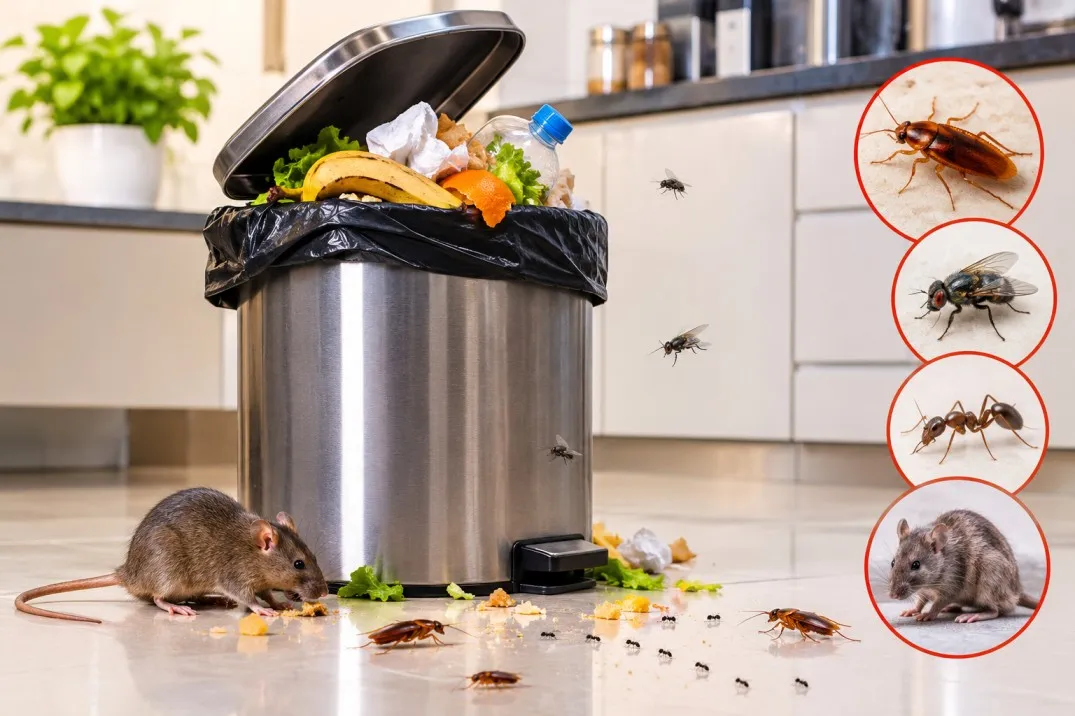
Which pests visit kitchen bins
House flies
House flies are attracted to rotting food and lay eggs on it. In warm conditions, eggs can hatch into maggots within a day, and the cycle from egg to adult fly can be completed in roughly one to two weeks. A bin that is emptied only every few days gives flies enough time to complete part of their breeding cycle inside it. Maggots in the bin or on the floor beneath are a clear sign.
Fruit flies
These small, tan, red-eyed flies breed in fermenting fruit, vegetable peels, juice residue and the sticky film on the inside of bins. They hover around the bin and the fruit bowl, and they reproduce quickly in warm weather.
Cockroaches
German cockroaches come to feed on food scraps and drink from the moisture at the bottom of the bin, and they hide in the cracks around it by day. American cockroaches often arrive from drains and shared shafts. Droppings near the bin, live cockroaches when you move it and egg cases in the corners behind it are the usual signs.
Ants
Ants follow sweet and greasy residue to the bin and along its rim. A trail from the wall to the bin means there is a nest nearby, and the bin is simply their food source.
Rats and mice
Rodents are drawn to food waste, especially in bins that are open, overflowing or kept at floor level against a wall. They gnaw plastic, leave droppings and spread contamination, and they often nest nearby.
Drain flies and other drain-linked pests
If the bin sits next to a floor drain or under the sink, drain flies and cockroaches from the pipe can use the bin as a feeding stop. The bin may not be the source, but it supports the problem.
Signs that your bin is attracting or hosting pests
- Small flies hovering around the bin, especially when you lift the lid.
- Maggots or white larvae inside the bin, on the liner or on the floor beneath.
- Cockroaches on or near the bin at night, or droppings along the bin base and the wall behind it.
- Ant trails leading to the bin or along its rim.
- Gnaw marks, torn liners or droppings that suggest rats or mice.
- A sticky or oily film under the bin or in the lid hinge.
- A sour smell that comes back within a day even after emptying.
- Liquid pooling on the floor under the bin.
Why it matters: hygiene, health and spreading problems
Flies and cockroaches that feed on waste can carry germs on their bodies and legs and transfer them to food, plates and worktops when they land. This raises the risk of stomach infections, particularly for young children and elderly family members. Rodent droppings and urine can contaminate food and surfaces, and cockroach droppings and shed skins are household allergens that can worsen asthma and allergies. If anyone in your household has ongoing digestive, respiratory or allergic symptoms, please consult a doctor and treat the pest problem as part of the response.
A neglected bin also affects the rest of the building. In an apartment, overflowing bins, leaking bags and waste left in corridors draw pests that then travel along shared walls and shafts to neighbouring flats. Managing your bin properly is one of the simplest ways to protect your own home and your neighbours.
How to choose a bin that does not attract pests
- A tight-fitting, lockable or pedal-operated lid: A pedal bin lets you open the lid without touching it and closes automatically. Check that the lid sits flush with no gaps. Swing lids and loose lids are less reliable.
- Smooth, non-porous material: Hard plastic or stainless steel is easy to wash and does not absorb smells. Avoid cracked, warped or rough-surfaced bins that trap residue.
- No holes, mesh or perforations: Even small openings let flies in and leachate out.
- A sensible size: A bin so large that you only empty it every few days encourages delay. Choose a size you will fill and empty daily.
- A removable inner bucket or a rim that holds a liner firmly: This makes lifting and washing easy and stops liners slipping down inside.
- A stable, wide base: Bins that tip over spill waste and attract pests.
- Separate bins for wet and dry waste: A small covered bin for wet kitchen waste and a separate one for dry recyclables helps keep moisture and odour contained. Wet and dry waste segregation is expected in Bengaluru, so keeping them apart also helps you comply with your local collection system.
- Easy-to-clean design: Avoid decorative bins with grooves, hinges and crevices that are hard to scrub.
Where to keep the bin
- Away from the stove and heat sources: Heat speeds up rotting and fire risk.
- Away from the sink drain and floor drains: Moist, drain-adjacent corners are cockroach and drain fly territory.
- Not tight against a wall or inside a damp cabinet: Leave a small gap so you can clean around it and see pest activity.
- On a clean, dry floor or a stand: Placing the bin on a small tray or mat that you can wash catches drips.
- Outside the kitchen overnight when possible: Moving the sealed bag to a closed outdoor or lobby bin at night removes the main nighttime attraction.
How to clean a kitchen bin: a step-by-step guide
- Empty the bin completely and tie the bag securely before carrying it out.
- Take the bin outdoors or to a balcony or bathroom where you can wash it freely.
- Remove any lid, inner bucket and pedal parts that detach, and wash them separately.
- Scrub the inside and outside with hot water and dish soap or a mild detergent using a long-handled brush, paying attention to the base, the rim, the hinge and the lid underside.
- Remove stubborn residue with a paste of baking soda and water, then rinse well.
- Disinfect if needed using a diluted household disinfectant according to its label. Never mix bleach with vinegar or other cleaners.
- Rinse thoroughly and dry fully in the open air or with a clean cloth. A damp bin invites mould, odour and insects.
- Wash the spot where the bin stands: Wipe the floor or mat, and clean the wall behind it.
- Fit a fresh liner that matches the bin size so it does not slip or tear, and sit it neatly under the rim.
- Put a layer of newspaper or a thin absorbent layer at the bottom for wet waste if the bin is prone to leachate, and replace it daily.
- Clean on a fixed day each week: Make it part of your routine so that it does not get skipped.
Daily habits that keep pests away
- Empty the bin every day, ideally in the evening before bed, and never leave wet waste in the kitchen overnight.
- Drain and drip-dry wet waste before binning, because less liquid means less smell and fewer flies.
- Wrap meat, fish and other strong-smelling waste in a separate bag or paper before putting it in the bin.
- Rinse food packets and containers before putting them in the dry waste bin.
- Keep the lid closed at all times except when you are using it.
- Wipe up spills and drips on the floor and bin rim immediately.
- Double-bag leaking waste before carrying it out so it does not leave a trail for pests.
- Do not let the bin overflow: Press-packed waste is hard to close and attracts flies. Empty it before it fills.
Wet waste, dry waste and home composting without pests
Segregating waste is good for the city and for pest control, because dry waste such as paper, plastic and cardboard is less attractive when it is kept clean and apart from food scraps. Use a small, tightly covered container for wet waste and keep it out of the sun. Rinse dry recyclables and flatten cardboard before storing it, and remove cardboard from the kitchen regularly because it hides cockroaches and eggs.
If you compost at home, use a closed composter or a container with a tight lid and air holes covered with fine mesh. Balance wet scraps with dry material such as shredded leaves or paper, avoid adding cooked food, meat, fish and dairy, bury fresh scraps rather than leaving them on top and turn the compost regularly. Keep the composter away from the kitchen door, drains and children's play areas. A pest-friendly composter produces flies, rodents and strong odours, so if any of those appear, add dry material, reduce moisture and secure the lid.
Common mistakes and quick fixes
- Leaving the bin uncovered or half-open: Switch to a bin with a tight lid.
- Emptying the bin only when it is full: Make it a daily habit.
- Putting wet and dry waste together: Use two bins and drain wet waste first.
- Using the bin as a spray target: Insecticide sprays on and around bins contaminate surfaces and do not address the source.
- Ignoring the floor under the bin: Clean it every time you wash the bin.
- Using the same liner for days: Replace it daily and never reuse leaking bags.
- Leaving garbage bags in the lobby or on the balcony overnight: They attract rodents, cockroaches and stray animals.
- Keeping the bin next to the sink drain: Move it to a drier spot.
Bangalore-specific factors
In Bangalore, warm weather and monsoon humidity speed up the decay of waste, so food scraps turn smelly and fly-friendly within hours rather than days. Door-to-door waste collection usually follows a schedule, and if it falls before the day's cooking is finished, many households keep waste at home overnight. Where this is the case, use a tightly sealed container, double-bag wet waste and put it out for collection as early as the rules allow.
In apartment communities, shared garbage rooms, chutes and common bins can be a major source of cockroaches, flies and rodents. If your own bin routine is good but pests keep arriving, raise the matter with your association and facility team: ask for regular washing and treatment of garbage rooms and chutes, covered collection bins and prompt removal of waste. Society-wide coordination is far more effective than every flat acting alone. Also remember that pets, stray animals and crows can tear bags left outside, so use covered containers rather than leaving bags on the floor.
Myths about kitchen bins and pests
- "Only dirty homes have flies in the bin." Flies can enter from outside and breed in even a small amount of waste left for a day or two.
- "A scented liner or air freshener solves the problem." Fragrance covers odour without removing the food and moisture that attract pests.
- "Spraying the bin with insecticide keeps pests away." Spray contaminates the bin and its surroundings, does not remove the attraction and can scatter cockroaches.
- "A bigger bin means fewer trips and less mess." Bigger bins that stay full for days give pests more time and more food.
- "Bleach fixes everything." Bleach can help clean a bin when used on its own according to the label, but it does not replace removing waste daily and drying the bin fully, and it must never be mixed with other cleaners.
When a bin problem needs professional help
Call a pest professional if you see cockroaches in daylight or in large numbers around the bin, if flies keep returning after thorough cleaning and daily emptying, if you find droppings or gnaw marks that suggest rodents, if ant trails keep coming back, or if you suspect that the problem comes from a shared drain, garbage room or neighbouring flat. A professional will inspect the kitchen and surroundings, identify the pests and their source, and use gel baiting, growth regulators and targeted treatments where they are safe and effective, along with advice on sealing and sanitation.
Flies, roaches or ants around your kitchen bin? iPest's pest control team in Bangalore traces the problem to its source, from the bin and the drain to the garbage room and wall gaps, treats it with targeted baits and growth regulators, and advises on the waste habits that stop it returning. Book an inspection today.
Frequently asked questions
How often should I empty and clean my kitchen dustbin?
Empty it at least once a day, particularly if it holds wet waste, and do not leave wet waste in the kitchen overnight. Wash the bin with hot water and soap once a week, and clean it immediately after leaks or spills. Dry it completely before putting in a fresh liner.
Why do I get maggots in my dustbin?
Maggots are fly larvae. Flies lay eggs on rotting food, and in warm weather the eggs can hatch within a day. The usual causes are leaving wet waste for too long, a lid that does not seal and liquid pooling at the bottom. Empty the bin daily, drain wet waste, keep the lid closed and wash the bin thoroughly. Remove any maggots on the floor and clean the area.
What is the best type of dustbin to avoid pests?
A pedal bin with a tight-fitting lid, smooth non-porous walls, no holes or cracks and a size you will empty daily is a good choice. Use separate covered containers for wet and dry waste, and avoid open or perforated bins.
Can I put insecticide spray in or around the bin?
It is better not to. Spraying the bin or the surrounding area contaminates surfaces, does not remove the food and moisture that attract pests and can scatter cockroaches into other parts of the kitchen. Use cleaning, drying, lids and daily emptying instead, and let a professional place baits in cracks away from food and waste.
How do I stop fruit flies from coming back to my kitchen?
Remove the breeding sources: overripe fruit, peels in open containers, sticky juice residue and dirty bin rims. Empty and wash the bin, wipe the fruit bowl area, store ripe fruit in the fridge and check the drain for slime. If they persist, look for hidden sources such as a damp sink cabinet or a leaking bin.
My building's garbage room is always full of cockroaches. What can I do?
Report it to your association or facility manager with photos and dates, and ask for regular washing, covered bins, timely waste removal and professional treatment of the garbage room and chutes. Meanwhile, keep your own bin and kitchen clean, seal pipe cutouts and gaps, and consider treatment for your flat if cockroaches are already inside.
This guide is part of iPest's complete resource on professional pest control in Bangalore. See our guides on a pest-proof kitchen routine, home waste segregation without attracting pests and our full pest control guide for Bangalore.
Health note: This article provides general information and cannot diagnose any individual. If a family member has ongoing respiratory, allergic or digestive symptoms, please consult a doctor.
Need Pest Control in Bangalore?
Free inspection, same-day service and a re-service warranty across Bangalore.
Near you: Pest control in Chickpet · Pest control in Kothanur
Book Pest Inspection
Our team will contact you within 30 minutes
Thank you! We'll call you shortly.
For urgent help, call +91 7411032320