Pests in Washing Machines and Dishwashers
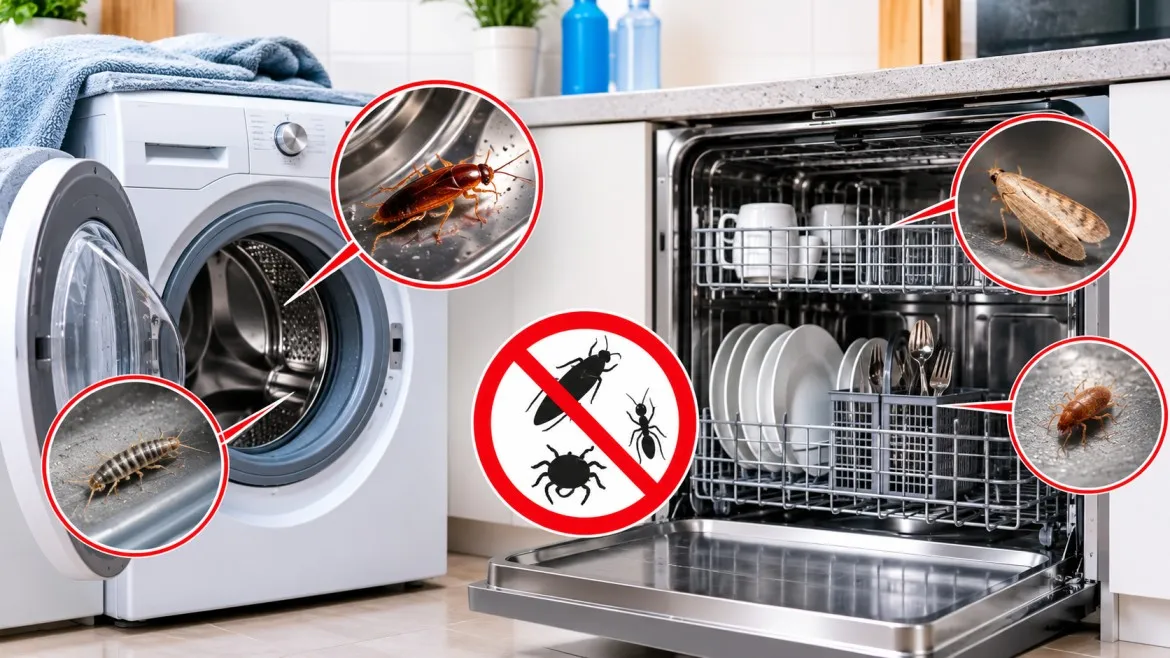
Pests in Washing Machines and Dishwashers: Cockroaches, Ants and Drain Flies
You lift the lid of the washing machine and a few tiny, moth-like flies drift out. Or you open the dishwasher and find a cockroach sitting beside the filter. Or a line of ants is marching along the hose behind the machine and disappearing into the wall. Washing machines and dishwashers are designed to be clean places, so finding pests in them is both surprising and unpleasant. It also raises an obvious worry: if insects live in the machine that cleans your clothes and dishes, is anything you wash actually clean?
The short truth is that these appliances sit at the meeting point of everything pests need: warm, damp, dark spaces, a steady supply of moisture, and a hidden slime of detergent residue, lint and food particles that feeds insects and the microbes they live on. They also connect directly to drains and pipes, which are the highways pests use to move through a building. This guide explains why pests choose washing machines and dishwashers, how to identify cockroaches, ants, drain flies and other visitors, what you can safely do yourself, what to avoid, when to call a plumber or a pest professional, and how to keep your appliances and drains pest-free in a Bangalore home.
The short answer: the machine is the shelter, the drain is the source
Most pests found in or around washing machines and dishwashers do not start in the appliance. They arrive through the drain, along pipes and cables, or from cracks in the wall behind the machine, and then settle where it is damp, warm and undisturbed. Drain flies breed in the slimy film inside drains and hoses. Cockroaches shelter in warm motors, behind panels and in food debris trapped in dishwasher filters. Ants follow moisture and sugary residue along hoses and pipes. To get rid of them, you need to clean the appliance properly, clear the drain and hose connections, fix leaks and damp, seal gaps, and, if cockroaches or ants are established in the walls and cabinets, bring in professional treatment. Never spray insecticide inside the drum or the dishwasher tub, and never mix cleaning chemicals to "kill everything."
Why washing machines and dishwashers attract pests
- Constant moisture: Water remains in hoses, seals, detergent drawers and traps long after the cycle ends. Cockroaches, ants, silverfish and flies all need water and find it easily here.
- Warmth: Motors, pumps and heating elements stay warm after use. German cockroaches in particular prefer warm hiding spots.
- Organic film: Lint, skin cells, detergent residue, fabric softener and food particles combine into a thin, slimy layer inside drains, hoses and filters. This film is what drain fly larvae feed on, and it also attracts fruit flies and cockroaches.
- Food debris in dishwashers: Unemptied filters, food bits trapped in spray arms and grease around the door seal supply food around the clock.
- Dark, undisturbed gaps: The space behind and beside a machine, the cutouts for pipes and the gap around a standpipe are rarely cleaned or sealed.
- Direct access to drains: Hoses connect the appliance to floor drains, standpipes or sink traps. If a seal is dry or loose, pests can climb straight up from the sewer line or a neighbour's pipe.
- Utility areas that are easy to ignore: In many Bangalore flats, the washing machine sits in a utility balcony or a corner beside the kitchen, where damp, open drains and stored cartons create ideal conditions.
Which pests turn up, and how to tell them apart
Cockroaches
German cockroaches are small, light brown insects with two dark stripes behind the head, and they are the most common species in kitchens and utility areas. Larger American cockroaches, which are reddish brown, tend to come up from drains and shafts. Both are attracted to dishwasher filters, damp seals and warm motors. Signs include dark pepper-like droppings near seals and hoses, shed skins, egg cases and live insects when you pull the machine out or open a panel at night.
Ants
Ants usually enter in search of moisture or sweet and greasy food residue. You will see them trailing along the hose, the back of the machine, the floor drain or the base of the dishwasher. A visible trail usually means the nest is somewhere nearby, in a wall void, a cabinet or under tiles, not inside the appliance itself.
Drain flies (moth flies)
These are tiny, fuzzy, moth-like flies, about two to five millimetres long, that rest on walls near drains and flutter in short, clumsy hops. Their larvae live in the slimy film inside drains, traps, overflow pipes and hoses. In warm conditions, the life cycle from egg to adult can take only a couple of weeks, so a small colony can grow fast. If you see them around the washing machine, floor drain or dishwasher, the breeding site is almost always in the drain or hose, not in the machine itself.
Fruit flies
Fruit flies are small, tan or brown flies with red eyes. They breed in fermenting residue, including leftover food in dishwasher filters, drain traps and dustbins. They look similar to drain flies at a glance, but fruit flies hover around food and have a smoother, less hairy appearance.
Silverfish
These shiny, silvery, wingless insects thrive in damp, starchy environments such as laundry baskets, cardboard boxes of detergent and cupboards beside the washing machine. They are mostly a nuisance and a sign of excess humidity.
Mosquitoes and other water-breeding insects
Standing water in a blocked floor drain, a utility-area bucket or a leaking tray near the machine can become a mosquito breeding spot. If you see wrigglers in water, fix the water source and drain the container.
Signs that pests are living in or around your appliance
- Tiny flies resting on walls or hovering around the floor drain, sink or machine, particularly in the evening.
- A musty, sour or sewage-like smell from the drum, the dishwasher or the drain, even after cleaning.
- Black or brown specks near door seals, filters, detergent drawers and hoses.
- Ant trails from the wall to the hose, drain or behind the machine.
- Live cockroaches when you open the cabinet, pull the machine away or check at night with a torch.
- Egg cases or shed skins in the gaps behind and beside the appliance.
- Slimy black residue in the door gasket or detergent compartment.
- Clothes or dishes that still smell stale after washing.
Why it matters: hygiene, health and appliance performance
Pests in and around these machines are a hygiene issue because the machines are supposed to leave things clean. Cockroaches can carry germs from drains and garbage onto the surfaces they touch, including door seals, racks and the cabinet where you store clean dishes. Drain flies breed in sewage-contaminated film and can carry bacteria on their bodies, although they do not bite. Mould and slime in seals and hoses can leave clothes with a stale smell and, for some people, irritate skin or worsen allergies. If anyone in your household has asthma, skin sensitivity or a weak immune system, please speak to a doctor about any persistent symptoms, and treat the problem seriously.
There are practical costs as well. Insects and their debris can block drain filters, interfere with sensors and contaminate electronic control boards. Constant dampness can corrode hose connections and cause leaks, which in turn feed more pests. A machine that smells, drains slowly or throws up errors is often telling you something is wrong with the drain path, not just the appliance.
Safety first: what you should never do
- Do not spray insecticide inside the drum, the dishwasher tub, the detergent drawer or the filter. Residue can remain on surfaces that touch clothes, skin and dishes.
- Do not use foggers or aerosol sprays near the machine's electronics or near a gas stove. Many aerosols use flammable propellants, and liquids can damage circuits.
- Do not mix bleach with vinegar or other cleaners. The combination can release harmful gases. Use only the cleaner recommended in your appliance manual, and never combine products.
- Do not pour boiling water on all kinds of drain pipes. Some plastic pipes and joints can soften or warp. Use hot tap water, not boiling water, unless your plumber says it is safe for your pipes.
- Do not use harsh drain chemicals repeatedly. They can corrode pipes and are dangerous if they splash. Biological or enzyme-based drain cleaners made for organic film are gentler and better suited to drain fly control.
- Do not open sealed panels or electrical compartments unless you are qualified. Disconnect power and call an appliance technician for anything beyond the parts the manual tells you to clean.
- Do not place baits where children or pets can reach them. Professional gel baits are placed in cracks and crevices that small hands and paws cannot access.
How to clean a washing machine to remove pest attractants
The exact steps depend on whether you have a front-loading or top-loading machine, so check your manual for the recommended cleaning cycle and cleaner. The general routine below works for most machines.
- Unplug the machine and turn off the water tap before you start any cleaning around the back or the drain.
- Empty the drum: Make sure no damp clothes are left inside.
- Clean the detergent drawer: Pull out the drawer or dispenser if it is removable, wash it in warm soapy water, scrub away residue and let it dry fully before replacing it.
- Clean the door seal (front-loaders) or lid area (top-loaders): Gently pull back the rubber folds and wipe out lint, hair and slime. Use a soft brush for stubborn film, and wipe dry.
- Clean the filter or lint trap: Many front-loaders have a drain pump filter behind a small panel at the bottom front. Place a shallow tray and towel underneath, open it slowly as water will come out, remove trapped debris, rinse the filter and refit it firmly. Top-loaders often have a removable lint filter inside the drum or near the agitator.
- Run a tub-clean or hot cycle: Use the machine's self-clean programme or a hot wash with a cleaner recommended by the manufacturer, with the drum empty. Follow label directions exactly.
- Wipe the exterior and look behind: Pull the machine forward a little if possible and clean the floor and wall behind it, removing dust, lint and food residue. Check for leaks at the tap connection and drain hose.
- Leave the door or lid open after use: Let the drum and seal dry between washes. A closed, wet drum is an invitation to mould and insects.
- Store detergent and softener properly: Keep boxes closed and off damp floors, and wipe spills quickly.
How to clean a dishwasher to remove pest attractants
- Remove and rinse the filter every week or two. Food trapped here feeds cockroaches, fruit flies and drain flies. Scrub gently under running water and refit it properly.
- Clean the spray arms: Check the holes for blockages and clear them with a toothpick.
- Wipe the door seal and edges: Grease and food residue collect in the rubber folds and along the bottom edge.
- Check the tub bottom: Remove small food particles and labels that can clog the drain.
- Run a hot cycle with a dishwasher cleaner recommended by the manufacturer, with nothing else inside.
- Check the drain hose connection: Make sure the hose is correctly looped or fitted as the installation instructions describe, so that dirty water cannot flow back, and that the connection to the sink trap is sealed. Ask a plumber if you are not sure.
- Pull the machine out and clean the floor and cabinet around it if it is not built in too tightly. Look for droppings, egg cases and ant trails.
- Do not load plates that cockroaches have touched without rewashing them first. If you find a live cockroach in a loaded dishwasher, run the dishes through a hot cycle again or wash them by hand before use.
Clearing drains and hoses: where drain flies actually breed
If you see drain flies, the machine is only part of the story. The slime in the floor drain, the standpipe, the sink trap and the hose is where larvae develop, so spraying adult flies will give you only a short break.
- Find the likely breeding site: Tape a clear plastic cup or sheet over a suspect drain overnight, and see where flies gather underneath in the morning.
- Scrub the drain opening and cover: Remove the cover, scrub the edges and the first few centimetres of the pipe with a stiff brush and warm soapy water.
- Remove the slime: Use a biological or enzyme-based drain cleaner according to the label, as it digests organic film. Repeat as directed.
- Flush with hot tap water afterwards, not boiling water.
- Check the water seal: Floor drains have a trap that holds water to block sewer air and insects. If a drain in an unused bathroom or utility area has dried out, pour in water regularly, or add a little cooking oil on top to slow evaporation if your plumber agrees.
- Make sure the hose is not submerged: The washing machine drain hose should sit in the standpipe or drain with an air gap, not pushed deep into standing water.
- Seal gaps around the standpipe and hose: Use a suitable sealant or a fitting designed for the connection, so insects cannot climb through the gap.
- Add a fine mesh drain cover: A mesh or insect-proof cover on floor drains blocks pests while letting water through.
- Repeat the cleaning weekly for two to three weeks: Drain fly eggs and larvae need repeated disruption to break the cycle.
Dealing with ants around the machine
Ants are a symptom of a nest nearby, so killing the visible ones does very little. Wipe away the trail with soapy water to remove the scent line, clean up any sugary or greasy residue, fix damp spots and leaks, and seal gaps around pipes and skirting. Do not use repellent sprays on the trail, as they can scatter the colony and make the problem harder to treat. Professionals use baits and non-repellent products that foraging ants carry back to the nest, which is what ends the problem. If trails keep returning within a few days, call for treatment.
What professional treatment involves
- Inspection of the whole path: The technician checks the appliance surroundings, the drain connections, the walls, cabinets and floor drains to find where pests enter and where they breed.
- Pest identification: Cockroaches, ants, drain flies, fruit flies and silverfish all need different handling, so correct identification matters.
- Gel baiting for cockroaches: Small placements in cracks and crevices around the machine, away from food-contact and wet surfaces and out of reach of children and pets, combined with insect growth regulators to stop nymphs from maturing.
- Ant baiting and nest-focused treatment: Bait stations or targeted treatments along trails and entry points, so workers carry the active ingredient back to the colony.
- Drain treatment and advice: Cleaning and treating drains and traps to break the breeding cycle of drain flies, along with advice on regular drain maintenance.
- Sealing and proofing recommendations: Closing gaps around pipes, standpipes and cabinet edges, and fixing leaks.
- Coordination with a plumber or appliance technician: If a hose, trap or seal is faulty, the plumber needs to fix it before pest treatment can hold.
- Follow-up: A return visit to check progress, because eggs and hidden insects may emerge after the first visit.
A simple routine to keep appliances and drains pest-free
- After every wash or dish cycle: Leave the door or lid open so the inside can dry, and wipe the door seal if it is wet.
- Weekly: Rinse the dishwasher filter, empty and wipe the detergent drawer, wipe the seals and flush floor drains with hot tap water.
- Monthly: Run the manufacturer-recommended cleaning cycle for the washing machine and dishwasher, clean the drain filter on the washing machine and scrub the drain covers.
- Every few months: Pull the machines forward, clean behind and beside them, check hoses and connections for leaks and reseal gaps.
- For vacant or rarely used areas: Pour water into floor drains every week or two so traps do not dry out.
- Waste and storage habits: Keep dustbins covered, avoid storing cartons and damp laundry near the machine, and keep detergent boxes sealed.
Bangalore-specific factors
Bangalore's monsoon season, from roughly June to September, raises humidity indoors, and damp utility areas become much more attractive to cockroaches, silverfish and drain flies. In many parts of the city, groundwater and tanker water are hard, which leaves scale and sludge in hoses and drains and gives microbes and insect larvae more to feed on, so regular cleaning cycles matter more. In apartments, washing machines and dishwashers often connect to shared stack drains and floor drains in utility balconies, so pests can travel between flats along pipes and shafts. If your neighbours have a cockroach or drain fly problem, you may keep getting new arrivals even after thorough cleaning of your own machine.
Flats that are closed for weeks while owners travel are especially at risk, because floor drain traps dry out and let insects and sewer air in. If you leave Bangalore for a holiday, run water down floor drains before you leave, empty the machines, leave the doors open and arrange for someone to flush drains in your absence. In newer buildings with modular kitchens, the dishwasher niche often has an unsealed cutout behind it for pipes and cables, which is a common cockroach and ant entry route worth sealing.
Myths about pests and household machines
- "The machine is full of soap, so pests cannot live there." Detergent leaves a nutrient-rich film, and the damp seals and hoses are comfortable for insects and microbes.
- "A bleach cycle solves everything." Bleach is not a universal fix, can damage seals and, when mixed with other cleaners, can be dangerous. Follow the manufacturer's instructions.
- "Pouring boiling water down the drain kills all drain flies." It may kill some larvae but does not remove the slime they live in, and it can damage some pipes.
- "Drain flies are the same as mosquitoes." They look different, they do not bite and they breed in drain slime, not in clean standing water.
- "If I see no insects, the drain is fine." Larvae and eggs live inside the pipe film and may not be visible until adult flies emerge.
- "Spraying around the machine will keep pests away." Repellent sprays can scatter cockroaches and ants into new areas, and they do not fix the damp or the drain.
Common mistakes to avoid
- Cleaning the machine but ignoring the floor drain, hose connection and standpipe.
- Keeping the door shut after every wash, trapping damp air inside.
- Letting the dishwasher filter fill with food waste for weeks.
- Using repellent sprays that disperse ants and cockroaches.
- Spraying chemicals into the drum, tub or detergent drawer.
- Not fixing leaks and damp patches behind or under the machine.
- Treating only your own flat when the source is a shared drain or shaft.
- Skipping a follow-up cleaning after drain fly treatment, allowing larvae to restart the cycle.
Seeing cockroaches, ants or tiny flies around your washing machine or dishwasher? iPest's pest control team in Bangalore traces the problem back to the drain, wall gap or cabinet where it starts, treats it with targeted baits and growth regulators kept away from food and wet surfaces, and advises on the cleaning and sealing that stop it returning. Book an inspection today.
Frequently asked questions
Why do I see tiny flies near my washing machine or floor drain?
They are most likely drain flies, also called moth flies. Their larvae feed on the slimy organic film inside drains, traps and hoses, and the adults rest nearby. Cleaning the drain, scrubbing the opening, using a biological drain cleaner and repeating the process weekly for two to three weeks usually breaks the cycle. If flies keep returning, there may be a hidden leak or a shared drain problem that needs a plumber or pest professional.
Can cockroaches live inside a dishwasher?
Yes, particularly around the filter, the door seal and the area under the tub, where food debris and moisture collect. They are also found in the warm cavity behind the machine and in the cabinet gap. Clean the filter regularly, wipe the seal and clean around the machine. If you find a live cockroach in a loaded dishwasher, rewash the dishes before use.
Is it safe to use my washing machine if I have seen cockroaches or ants near it?
Generally yes, after you clean the drum, seal and filter and run a hot cleaning cycle as the manufacturer recommends. Pests near the machine do not usually enter a sealed, running drum, but they can contaminate the seal, drawer and surroundings. If you are concerned, rewash items that were stored near the machine, and tackle the infestation at its source.
Can I put insecticide spray inside the machine to kill pests?
No. Spraying inside the drum, the dishwasher tub or the detergent drawer can leave residues on surfaces that touch clothes, skin and dishes, and it can damage the appliance. Use cleaning, drying and sealing, and let a professional apply targeted baits and treatments in cracks, gaps and drains away from those surfaces.
How do I stop ants following the hose to my dishwasher or washing machine?
Wipe the trail with soapy water, clean up sweet and greasy residue, fix leaks and seal gaps around pipes and cutouts. Avoid repellent sprays on the trail. If ants return within a few days, there is a nest nearby, and professional baiting is the reliable solution.
When should I call a plumber, an appliance technician or a pest controller?
Call a plumber if a hose, trap or drain is leaking, slow or broken. Call an appliance technician if pests or debris are inside sealed panels or if the machine shows faults. Call a pest controller if you see repeated cockroach activity, ant trails that return, or drain flies that persist after you have cleaned the drains. Often you need two of them working together, so describe the problem fully to each.
This guide is part of iPest's complete resource on professional pest control in Bangalore. See our guides on cockroaches in refrigerators and microwaves, drain covers and traps for pest prevention, a pest-proof kitchen routine and our full pest control guide for Bangalore.
Health note: This article provides general information and cannot diagnose any individual. If a family member has ongoing respiratory, allergic, skin or digestive symptoms, please consult a doctor.
Need Pest Control in Bangalore?
Free inspection, same-day service and a re-service warranty across Bangalore.
Near you: Pest control in Jakkur · Pest control in Srirampura
Book Pest Inspection
Our team will contact you within 30 minutes
Thank you! We'll call you shortly.
For urgent help, call +91 7411032320