
Hidden Cockroach Nesting Spots in Modular Kitchens Every Homeowner Should Inspect
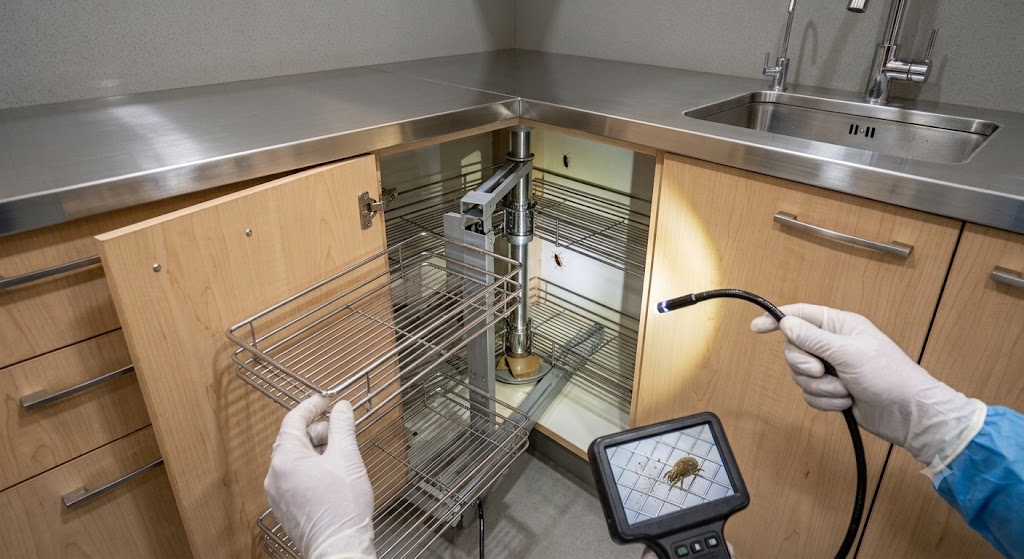
Where Cockroaches Hide in a Modular Kitchen — And How to Inspect Every Spot
Your modular kitchen looks spotless. The counters are wiped, the sink is dry, the shutters gleam. And yet you keep spotting cockroaches at night — or worse, catching that faint musty smell when you open a cabinet. The reason is almost always the same: the roaches aren't living on the surfaces you clean. They're living inside the kitchen, in the sealed voids, borings and cavities that modular construction creates by design.
A modular kitchen is, from a cockroach's point of view, close to perfect real estate. It's warm, dark, humid, full of tight crevices, and packed with hidden spaces you can't see or wipe. This guide walks you through every hidden nesting spot in a modular kitchen, how to inspect each one, and what to do the moment you find a nest.
The Short Answer: Where Cockroaches Hide in a Modular Kitchen
The most common hidden cockroach nesting spots in a modular kitchen are:
- The toe-kick (plinth) cavity under the base cabinets
- The under-sink cabinet and plumbing cut-outs
- Hinge borings, dowel holes, and cam-lock holes drilled into the panels
- Behind and under drawers and telescopic runners
- Corner and carousel units (the dead space that can't be reached)
- Behind built-in appliances — hob cut-out, chimney duct, oven, and microwave housings
- The fridge recess (warm motor compartment)
- Cabinet backs — the gap against the wall and wire/pipe cut-outs
- The handleless J-profile (gola) channel behind shutters
- Lifting edge-banding and hollow shutter cores
These spaces share the four things every cockroach colony needs: warmth, moisture, darkness, and undisturbed crevices. Below, each one — and exactly how to check it.
Why Modular Kitchens Are Especially Cockroach-Prone
Modular kitchens create hiding places that a simple masonry kitchen never had. Understanding why helps you inspect the right places.
- They're built from particle board and MDF: These engineered boards are hollow-cored, laminated, and drilled full of holes for hinges, dowels, and fittings. Every one of those borings is a ready-made crevice sized almost perfectly for a cockroach or its egg case.
- They're full of sealed voids: The plinth cavity, corner dead-space, the gap behind the carcass, appliance housings — all are dark, enclosed, and permanently undisturbed. Nothing cleans them; nothing disturbs them.
- Humidity swells the joints: In Bangalore's climate — and especially through the June–September monsoon — moisture makes particle board swell and laminate edges lift, opening fresh gaps at panel edges and shutter lippings. Under-sink cabinets, which stay damp, are worst affected.
- They concentrate warmth and water: The sink, dishwasher, fridge motor, hob, and chimney all sit within a metre of each other, giving roaches heat and moisture side by side — exactly the microclimate German cockroaches breed fastest in.
This is why a modular kitchen can look immaculate and still host a thriving colony a few centimetres behind the laminate. If you've noticed the roaches keep coming back no matter how much you clean, the mechanism behind that is covered in our guide on why cockroaches keep returning even after cleaning — hidden nesting spots are a big part of the answer.
Detailed Inspection Guide by Nesting Spot
1. The Toe-Kick (Plinth) Cavity — The Number One Nest
The recessed strip at the very bottom of your base cabinets — the "toe-kick" or plinth, where your feet go — hides a long, continuous cavity running underneath the entire cabinet run. It's dark, warm, rarely opened, and often connected end to end. For a German cockroach colony, it's prime harborage.
How to inspect it: Gently pry off or slide out a section of the plinth board (most modular kitchens use clip-on or magnetic plinth panels). Shine a torch along the cavity. Look for droppings, egg cases, and a dark smear trail along the edges.
What you'll find if it's infested: Scattered pepper-like black specks (droppings), light-brown purse-shaped egg cases wedged in corners, shed skins, and a musty odour. This is the single most overlooked spot in the whole kitchen.
2. The Under-Sink Cabinet and Plumbing Cut-Outs
The cabinet beneath your sink is the wettest, most cockroach-friendly zone in the entire kitchen. Water lines, the drain trap, the pipe collar cut-outs, and constant condensation keep it damp — and cockroaches need water far more than they need food.
How to inspect it: Empty it out completely. Check the gaps where the drain and water pipes pass through the cabinet floor or back panel — these cut-outs are almost never sealed and open straight into the wall void. Feel for dampness; look behind stored bottles and cleaning supplies where you rarely reach.
What you'll find: Roaches clustered around the pipe collar, droppings on the cabinet floor, and often a slow leak or condensation you didn't know about. Clutter under the sink is a classic reason infestations persist — every stored item is another dark crevice.
3. Hinge Borings, Dowel, and Cam-Lock Holes
Look at the inside of any cabinet door and you'll see the large round recesses where the hinges seat, plus rows of small holes for shelf pins, dowels, and cam-lock fittings. Each of these drilled holes is a tight, dark, protected pocket — an ideal spot for a cockroach to wedge into or to cement an egg case.
How to inspect it: With a torch, check the hinge cup borings and any unused fitting holes, especially on the hinge side of doors near the top and bottom. Egg cases tucked into these holes are easy to miss.
What you'll find: Egg cases and droppings inside or around the borings. Because these holes are structural, you can't clean them out with a wipe — this is exactly why surface cleaning never ends an infestation.
4. Behind and Under Drawers and Runners
Telescopic drawer channels and the drawer boxes themselves create layered gaps — behind the runners, under the drawer base, and in the cavity the drawer slides into. Pull-out baskets and tandem units add even more hidden surface area.
How to inspect it: Fully remove a drawer or pull-out (most lift out once fully extended). Look into the empty cavity and at the back of the runners. Check the underside of the drawer base.
What you'll find: Droppings along the runner tracks and in the rear of the cavity, and egg cases stuck to the underside of the drawer base.
5. Corner and Carousel Units — The Unreachable Dead Space
L-shaped modular kitchens have a corner unit, and behind the carousel or "magic corner" mechanism sits a large volume of dead space you can never fully reach. It's the biggest single void in most kitchens and a favourite deep-harborage zone.
How to inspect it: Rotate the carousel or pull out the magic-corner mechanism and shine a torch into the dead space behind and beside it. This one is genuinely hard to inspect thoroughly, which is part of why professionals prioritise it.
What you'll find: In an established infestation, this is often the core of the colony — heavy droppings, multiple egg cases, and a strong musty smell.
6. Behind Built-In Appliances
Every built-in appliance sits in a housing with a cut-out and a warm, enclosed cavity behind it.
- Hob / gas cooktop: The granite cut-out for the hob opens into the cabinet below, and the underside of the hob traps grease and warmth.
- Chimney and ducting: The chimney housing and its ducting run are warm, greasy, and almost never cleaned inside.
- Built-in oven / microwave: These generate heat and sit in tight recesses with ventilation gaps roaches use as entry points.
- Dishwasher recess: Warm, damp, and enclosed — a strong nesting spot where fitted.
How to inspect it: Look under and behind the hob from inside the cabinet below. Check the ventilation gaps around the oven/microwave housing. Inspect the chimney's lower housing.
What you'll find: Grease-bound droppings and smear marks, especially around the hob and chimney where warmth and food residue combine.
7. The Fridge Recess and Tall-Unit Gaps
The refrigerator's motor compartment at the back and bottom is one of the warmest, most consistently undisturbed spots in any kitchen. The narrow gap where the fridge slots into its recess, and the sliver of space behind tall pantry units, are classic hiding routes.
How to inspect it: Pull the fridge out (carefully) and inspect the motor grille, the coils, and the drip tray — plus the wall and floor behind it. Check the gaps flanking any tall unit.
What you'll find: Roaches love the warm motor housing; expect droppings on the coils and drip tray and egg cases in the recess corners.
8. Cabinet Backs, Wire Cut-Outs, and Wall Gaps
The back panel of a modular carcass rarely sits flush to the wall — there's usually a small gap. Add the cut-outs where wiring, gas lines, and water pipes pass through, plus grommet holes for chimney and appliance cables, and you have a network of openings connecting your cabinets directly to the wall voids.
How to inspect it: Look behind and beside cabinets where accessible, and inspect every cable and pipe cut-out at the back of cabinets. These are the highways roaches use to move between the kitchen and the rest of the building.
What you'll find: Smear trails around cut-outs and gaps that lead into the wall — a sign roaches are travelling in from beyond the kitchen. In apartments, these openings are often how roaches migrate in from neighbouring flats.
9. The Handleless (Gola / J-Profile) Channel
Handleless modular kitchens use a recessed aluminium J-profile or "gola" channel behind the top edge of each shutter, so you can grip it to open. That continuous channel is a shaded, enclosed groove running along the cabinetry — and cockroaches tuck into it readily.
How to inspect it: Run a torch along the profile channel behind the shutter tops. Look for droppings and egg cases lodged in the groove.
What you'll find: Specks and egg cases along the channel, easy to miss because the profile is dark and recessed by design.
10. Lifting Edge-Banding and Hollow Shutter Cores
Over time — and faster in humid weather — the PVC or laminate edge-banding on shutters and panels lifts at the corners, and hollow-core shutters develop gaps at their edges. Each lifted edge is a fresh crevice, and a hollow shutter is an enclosed cavity.
How to inspect it: Run a finger along shutter and panel edges feeling for lifted lipping, especially near the bottom of under-sink and base-unit doors where moisture collects. Peer into any gaps.
What you'll find: Egg cases cemented behind lifted banding, and droppings emerging from shutter-edge gaps.
How to Tell a Spot is Actually Infested
As you inspect, these are the signs that a hiding place is an active nest rather than just an empty void:
- Droppings: For small German cockroaches, tiny black specks like ground pepper or coffee grounds; for larger species, cylindrical pellets. They cluster near harborage.
- Smear marks: Dark brown or black staining and streaks at the entrance to harborage, left in damp conditions where roaches rest.
- Egg cases (oothecae): Light-to-dark brown, purse-shaped capsules a few millimetres long, wedged into borings, corners, and gaps.
- Shed skins: Pale, translucent cast-off skins near nesting sites, since nymphs moult several times as they grow.
- A musty, oily odour: A strong, unpleasant smell in a cabinet is a hallmark of an established colony.
- Daytime sightings: Seeing roaches during the day usually means the harborage is overcrowded, which points to a large population.
If you find these signs, you've located harborage — and how you respond next matters a lot.
What to Do the Moment You Find a Nest
The instinct is to grab an aerosol spray and blast it. Don't. Most household sprays are repellent — they scatter the surviving roaches deeper into the voids, into wall cavities and into neighbouring cabinets, spreading the infestation instead of ending it.
A far better response:
- Don't spray repellents into harborage: You'll disperse the colony and make it harder to treat.
- Remove food and moisture sources around the spot: Fix the under-sink leak, dry the cabinet, and clear clutter so the surviving roaches have less to live on.
- Use targeted gel bait, not sprays: Placed in and near the crevices, roaches feed and carry the active ingredient back into the harborage, reaching the ones you can't see.
- Break the breeding cycle: Because egg cases survive and hatch on a delay, killing visible adults isn't enough — the treatment needs an insect growth regulator to stop the next generation. This is where professional treatment decisively beats DIY.
If several of the spots above are infested, or the nest is in unreachable dead space like the corner unit or behind built-in appliances, it's a job for a professional rather than a can of spray.
Preventing Nests in a Modular Kitchen
Once the kitchen is clear, a few modular-specific habits keep it that way:
- Seal the pipe and wire cut-outs under the sink and behind cabinets — these open into wall voids and are a main entry route.
- Fix leaks and keep the under-sink cabinet dry. Moisture is what sustains a colony; a dry cabinet is far less hospitable.
- Declutter storage. Every stored item under the sink and in base units is another crevice — keep them minimal and organised.
- Repair lifting edge-banding promptly so it doesn't become a new crevice.
- Clean grease from the hob and chimney housing, which otherwise feeds roaches in the warmest part of the kitchen.
- Inspect the plinth cavity periodically with a torch — the one spot almost nobody checks.
- Deep-clean behind the fridge a few times a year.
When to Call a Professional
A stray roach now and then doesn't need professional treatment. But if your inspection turns up droppings, egg cases or a musty smell in several spots — or you're seeing roaches in daylight, or they keep returning after you clean — the colony is established in voids you can't fully treat yourself. Corner units, appliance housings, and the plinth cavity in particular are hard to reach and easy to under-treat.
Frequently Asked Questions
- Where do cockroaches hide in a modular kitchen?
- Most commonly in the toe-kick (plinth) cavity under the base cabinets, the under-sink cabinet and its plumbing cut-outs, the hinge and dowel holes drilled into panels, behind drawers and runners, in corner and carousel dead space, behind built-in appliances like the hob and chimney, in the fridge recess, and in cabinet-back gaps and wire cut-outs. These spaces are dark, warm, humid and undisturbed — exactly what a cockroach colony needs.
- How do I know if there are cockroaches nesting inside my cabinets?
- Look for tiny black pepper-like droppings, light-brown purse-shaped egg cases wedged into corners and borings, pale shed skins, dark smear marks at crevice entrances, and a musty oily smell when you open the cabinet. Seeing cockroaches during the day is another strong sign of an established, overcrowded nest.
- Why do cockroaches keep coming back in a clean modular kitchen?
- Because they live inside the kitchen's sealed voids — plinth cavities, borings, appliance housings — not on the surfaces you clean. Cleaning removes food but not the hidden colony or its egg cases, which hatch on a delay. Until the harborage itself is treated, the roaches keep reappearing.
- Should I spray inside my kitchen cabinets to kill cockroaches?
- Not with ordinary aerosol sprays. Most are repellent and scatter surviving roaches deeper into the voids and neighbouring cabinets, spreading the infestation. Targeted gel bait placed near the crevices works far better because roaches carry it back into the nest, and professional treatment adds a growth regulator to stop the eggs from hatching.
- Are cockroaches attracted to modular kitchens more than regular kitchens?
- Modular kitchens offer more hiding places — particle-board borings, sealed cavities, appliance housings — and concentrate warmth and moisture around the sink, fridge and hob. In Bangalore's humid climate, joints swell and edges lift, opening extra crevices. So while cockroaches enter any kitchen, modular construction gives an established colony far more places to nest undetected.
- How do I cockroach-proof my under-sink cabinet?
- Fix any leaks and keep the cabinet dry, seal the cut-outs where the drain and water pipes pass through into the wall void, declutter stored items so there are fewer crevices, and inspect regularly with a torch. Since the under-sink area is the wettest spot in the kitchen, controlling moisture there does more than anything else to keep roaches away.
Need Cockroach Control in Bangalore?
Eliminate cockroach infestations with targeted gel baiting and spray treatments. Safe for children and pets. Available with 30-day free service warranty
Book Pest Inspection
Our team will contact you within 30 minutes
Thank you! We'll call you shortly.
For urgent help, call +91 7411032320