

16 Jun 2026
Pre-construction soil treatment and post-construction drill-and-inject termite control for homes, apartments, commercial buildings, warehouses, and industrial complexes across Bangalore. IS 6313 compliant. GreenPro certified termiticides. 5-year warranty included. Available in Garvebhavipalya and nearby areas.
Quick Booking
Choose your service and property type — we'll take care of the rest.
Property Type
Transparent starting prices. No hidden charges. Pay only after service.
Comprehensive treatment for your home.
Starting from
Price varies by property size
Available for
Comprehensive treatment for your home.
Starting from
Price varies by property size
Available for
* Exact price depends on property size. No payment required to browse all options.
Unlike cockroaches or mosquitoes that cause discomfort and health risks, termites cause structural damage — often silently, for months or years, before any visible sign appears. By the time damage is visible, repair costs can run into lakhs of rupees.
Termites feed on wood, paper, and cellulose 24/7 without making noise or leaving obvious marks — damage is often only discovered once a door frame, beam, or floor gives way.
Once termites reach structural timber or expansion joints, repair and reinforcement work can cost far more than a preventive treatment would have.
A termite-infested property is a red flag for buyers, tenants, and bank valuations — an active infestation can stall a sale or lower the offer significantly.
Most home insurance policies exclude termite and pest damage entirely, leaving the full repair cost with the property owner.
A mature subterranean termite colony can contain hundreds of thousands of termites, spreading from a single entry point to multiple rooms within a year if untreated.
Without pre-construction soil treatment, a building's foundation is exposed to termite entry the moment the plinth is laid — waiting until move-in is often too late.
Chemical soil treatment applied to the foundation trenches, plinth, and around pipe entry points before flooring is laid, creating a continuous chemical barrier the building sits on.
Best for: New construction, under-construction properties
Controlled drilling along the foundation line and affected walls, followed by injecting termiticide directly into the soil beneath the slab to rebuild the chemical barrier.
Best for: Existing homes, apartments, independent houses
Direct application to door frames, window frames, and wooden furniture already showing termite activity, to stop existing colonies and prevent re-infestation.
Best for: Wooden fittings, furniture, false ceilings
Bait stations installed around the property perimeter that worker termites carry back to the colony, eliminating the queen and the colony at the source — used where drilling isn't practical.
Best for: Paved areas, gardens, sensitive structures
Call, WhatsApp, or book online for a free termite inspection anywhere in Bangalore.
A certified technician inspects the property, checks for mud tubes, wood damage, and moisture entry points, and identifies whether it's subterranean or drywood termites.
We recommend pre-construction soil treatment, post-construction drill-and-fill, or wood treatment based on the property type and severity — with a fixed, written quote.
Treatment is carried out per IS 6313, the Indian Standard code of practice for anti-termite measures, using GreenPro certified termiticides.
Every post-construction treatment includes a 5-year warranty with scheduled follow-up inspections — if termites return, we re-treat at no extra cost.
Designed for real Bangalore homes — with children, pets, and elderly residents in mind.
We use CII GreenPro certified termiticides, independently verified for lower environmental impact without compromising treatment effectiveness.
Every treatment follows IS 6313, the Indian Standard code of practice for anti-termite measures in buildings — not an informal or improvised process.
You can stay in your home during treatment. Drilling and injection are localized to the foundation line and affected walls.
Treated areas are sealed and safe within a few hours — we'll tell you exactly when it's safe to let children and pets back into treated rooms.
IS 6313 is the Bureau of Indian Standards' code of practice for anti-termite measures in buildings, covering pre-construction chemical soil treatment as well as post-construction remedial treatment for existing structures. Following IS 6313 means treatment isn't improvised — the chemical barrier, drilling pattern, dosage, and application method all follow a documented, repeatable standard rather than technician judgement alone.
GreenPro is an ecolabel certification programme run by the Confederation of Indian Industry (CII), assessing products against criteria like environmental impact, resource efficiency, and health safety. Termiticides carrying GreenPro certification have been independently evaluated rather than self-declared as "eco-friendly" by the manufacturer.
Most termite infestations in Bangalore are subterranean — colonies that live in the soil and build mud tubes to reach wood above ground, which is why soil treatment around the foundation is central to both pre- and post-construction protection. Drywood termites, which live entirely within the timber itself without soil contact, are less common but need a different approach — direct wood treatment rather than a soil barrier.
A typical post-construction drill-and-fill treatment for an independent house or villa takes 4-6 hours in a single visit, depending on the perimeter length and severity. Apartments usually take less time since treatment is often localized to specific units rather than the full building perimeter. Pre-construction soil treatment is carried out in phases alongside the civil work — at the foundation trench stage and again before flooring.
| Feature | IPC / IPest | Most Other Companies |
|---|---|---|
| Multi-method targeted treatment | ✅ | Combined methods for complete elimination |
| Pay after service, not before | ✅ | Most others ask for advance payment |
| Free re-service warranty | ✅ | 30 to 365 days depending on plan |
| Certified, trained technicians | ✅ | Others often use untrained contract workers |
| Same-day service availability | ✅ | Others often need 2-3 days lead time |
| Operating in Bangalore since 2013 | ✅ | Many competitors started post-2020 |
Termite Treatment in Garvebhavipalya
IPest offers both pre-construction and post-construction termite barrier treatments. The post-construction package includes chemical soil treatment around the foundation, wall drilling and injection, and a long-term warranty. Recommended for older properties and buildings near green areas.
IPest is a licensed termite treatment provider in Bangalore operating since 2013. We handle both subterranean and drywood termite infestations using CIB&RC-registered termiticides, baiting systems, and physical barriers. Our AMC plan includes periodic inspections to catch infestations early.
IS 6313 is the Bureau of Indian Standards code of practice for anti-termite treatment in buildings. Following it means our soil treatment, drilling pattern, and chemical dosage follow a documented standard rather than being left to individual judgement — it's what separates a proper termite treatment from a generic pest spray.
GreenPro is an ecolabel certification from the Confederation of Indian Industry (CII) that independently verifies a product's environmental and safety claims. Our termiticides carry this certification rather than relying on unverified "eco-friendly" marketing.
Pre-construction treatment is applied to the soil and foundation trenches before flooring is laid, building a chemical barrier the structure sits on from day one. Post-construction treatment is for existing buildings — we drill along the foundation line and inject termiticide into the soil beneath the slab to rebuild that barrier after the fact.
Our post-construction termite treatment includes a 5-year warranty. If termites return to a treated area within that period, we re-inspect and re-treat at no extra cost.
Yes. We use GreenPro certified termiticides applied in a targeted, localized way — mainly along the foundation line and affected walls, not sprayed openly through the home. Treated areas are safe to use again within a few hours; our technician will confirm the exact time before leaving.
Common signs include mud tubes running along walls or foundations, hollow-sounding wood when tapped, discarded wings near windows or doors after swarming, and sagging or blistering paint on wood surfaces. If you notice any of these, a free inspection will confirm whether it's active and how far it's spread.
No. We don't take advance payment — you pay only after the treatment is completed, following a free inspection and a fixed, written quote. Call +91 7411032320 to book.
Termite Treatment in Garvebhavipalya
Our team will contact you within 30 minutes
Thank you! We'll call you shortly.
For urgent help, call +91 7411032320
Verified reviews from customers who booked this service.
Google Reviews

Hiral Thoria
Oct 16, 2026
Very good service. Humble person and does job very well.

Chayan Chakraborty
Oct 15, 2026
This has good service

shailesh Singh
Oct 15, 2026
We have done pest control from IPC and gyanappa did a fantastic job . Highly recommend him for any kind of pest control
We also serve these areas close to Garvebhavipalya.
An independent house reported a hollow-sounding wooden staircase and visible mud tubes running up an exterior wall — signs of an active subterranean termite colony that had likely been feeding undetected for over a year.
Our technicians carried out a full inspection, mapped the colony's likely path from the foundation to the staircase, and performed a post-construction drill-and-fill treatment along the affected foundation line and wall, followed by direct wood preservative treatment on the staircase.
The colony was eliminated within a single treatment cycle. The property is now covered under our 5-year termite warranty, with scheduled follow-up inspections to confirm there's no recurrence.
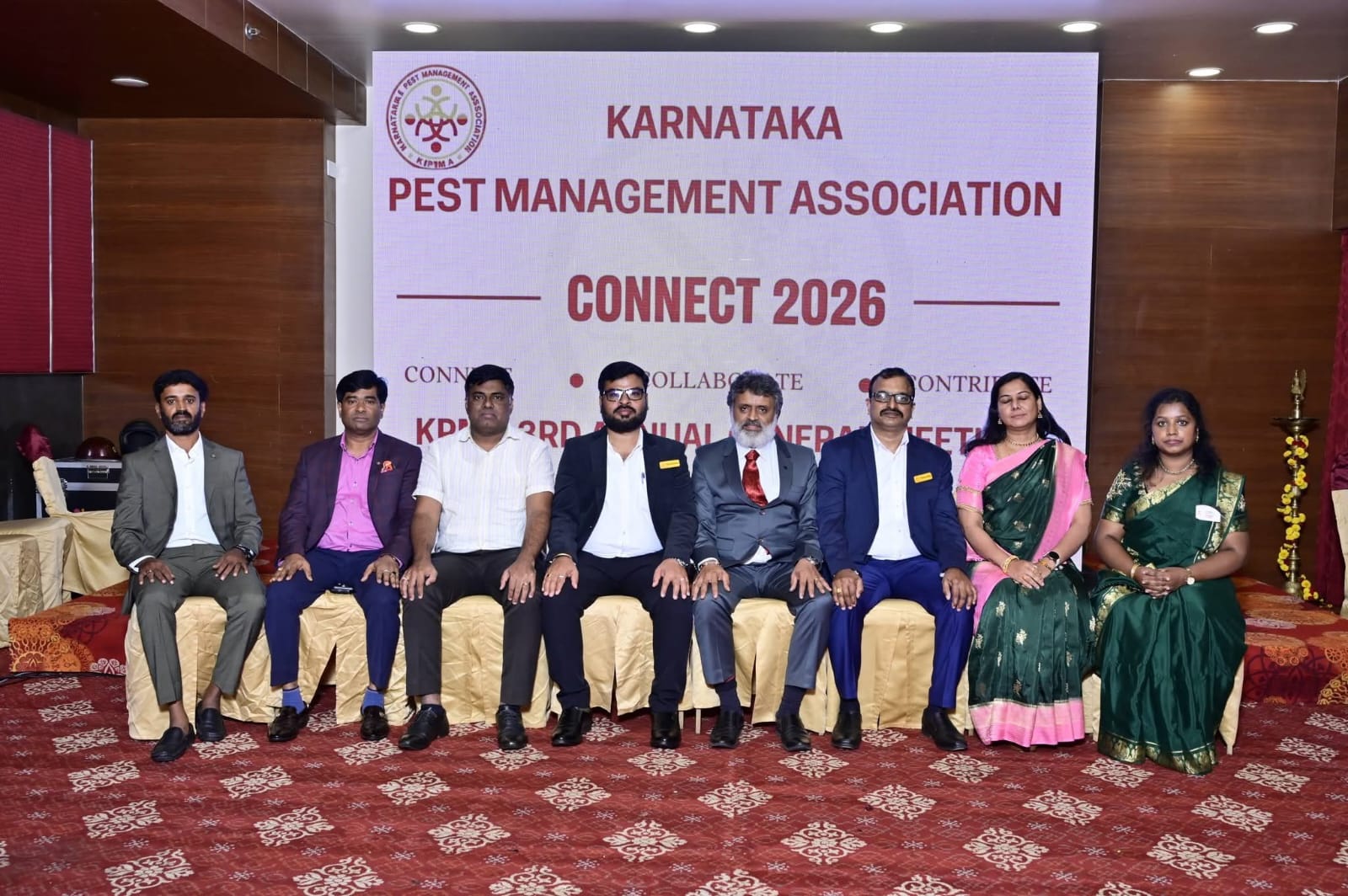
Recent activities, meetings, and milestones.
Call us or WhatsApp now for a free inspection and same-day service across Bangalore.