
How to Avoid Bringing Bed Bugs Home After Business Travel or Holidays
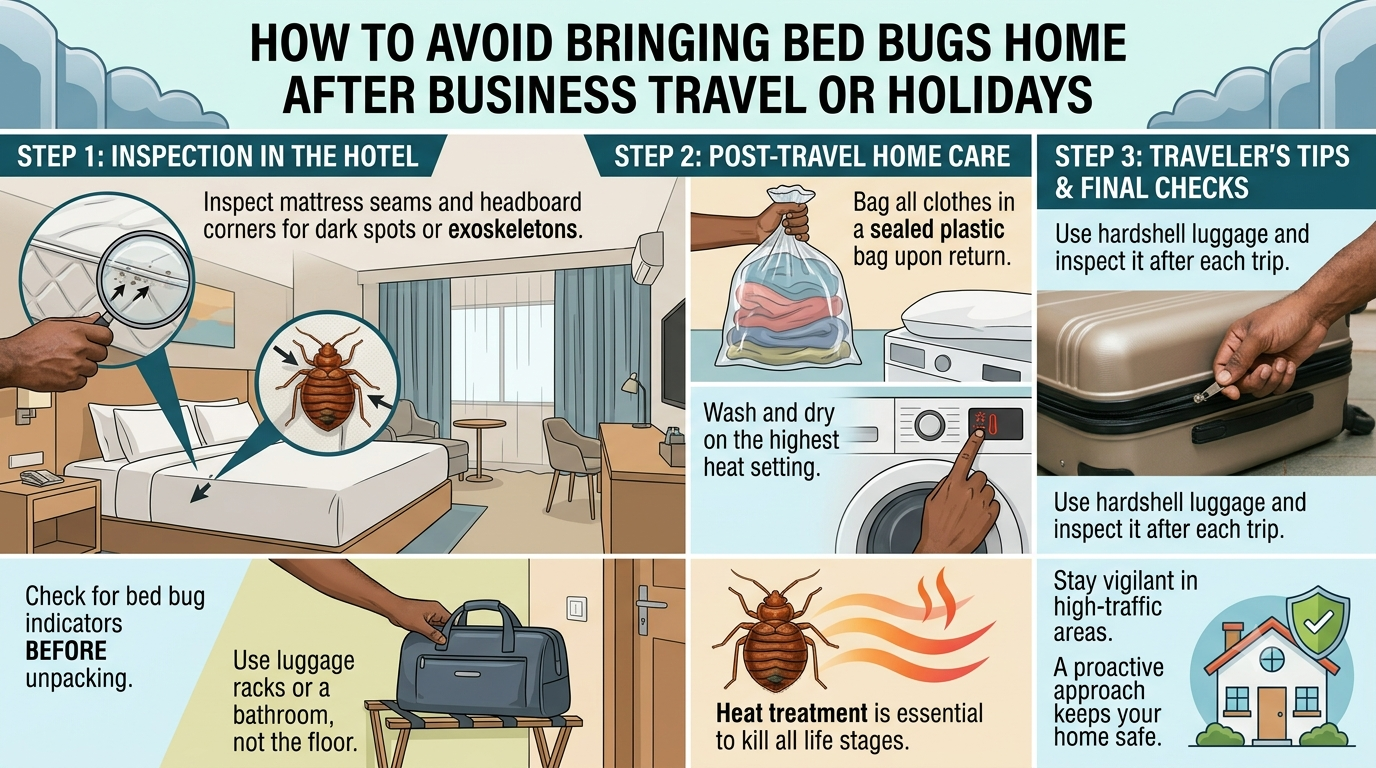
Bed bugs don't come from a dirty home. Most infestations start somewhere else entirely — a hotel room, an Airbnb, a train berth, a conference venue — and travel back with you in a suitcase, laptop bag, or the folds of a blazer. Bangalore's position as a major business and IT travel hub, combined with a strong weekend-getaway culture to places like Coorg and Goa, means most households here are exposed to this risk several times a year without realising it. The good news is that prevention takes minutes, not money, and it's dramatically cheaper than treatment: a two-visit professional bed bug treatment typically runs ₹10,000-15,000, while the habits in this guide cost nothing and take about 10 minutes per trip.
This guide walks through exactly what to do before you travel, how to inspect a hotel room properly, what to do during your stay and when packing up, and — the step most people skip — the re-entry routine that keeps bugs from ever reaching your bedroom in the first place.
The short answer: the 10-minute travel routine that prevents most bed bug infestations
Before unpacking in any hotel room, place your luggage on the rack (never the bed or floor) and spend two minutes checking the mattress seams, headboard, and nightstand for rust-coloured spots, shed skins, or live bugs. Keep your suitcase zipped and off the floor for the rest of your stay. When you get home, don't carry luggage into the bedroom — leave it in an entryway, garage, or laundry room, wash everything packed (worn or not) in hot water and dry on high heat for at least 30 minutes, and vacuum the suitcase itself before it goes back into a closet. Bed bugs can survive for several months without feeding — sometimes up to a year in cool conditions — so simply letting a suitcase "sit" for a while isn't a reliable way to be sure it's clear. Heat is what actually kills them.
Why travel is one of the most common ways bed bugs enter Bangalore homes
Bed bugs don't fly or jump — they hitchhike, moving from an infested room into luggage, bags, and clothing, then riding home with the traveler. Hotels, guesthouses, and short-term rentals see a constant turnover of guests and belongings, which is exactly the kind of environment bed bugs spread through most easily; pest control industry surveys consistently rank hotels and other lodging among the most commonly cited sources of new infestations. A single fertilized female that hitches a ride is enough to start a full infestation once she's back in a warm, humid Bangalore apartment, since she doesn't need to encounter a male again to keep laying eggs from that one mating. This is why travel-related prevention matters even if you've never had bed bugs before — the source usually isn't your home, it's wherever you stayed last.
Before you travel: pack smart to make inspection easier
- Prefer hard-shell luggage where possible. Fewer fabric folds and seams means fewer places for bugs to hide compared to soft-sided bags.
- Use sealed packing cubes or large ziplock bags inside your suitcase. This limits where bugs could hide even if they do get into the bag, and makes laundering easier when you get home.
- Pack a small flashlight or use your phone's torch. Hotel lighting is rarely enough to spot small dark spots or translucent nymphs in mattress seams.
- Bring a couple of spare large garbage bags. Useful for isolating worn clothing during the trip and for bagging luggage on the way home if needed.
At the hotel: how to inspect a room in under 5 minutes
Do this before you unpack anything, with your suitcase still on the luggage rack:
- Pull back the sheets and check the mattress seams and piping, especially at the corners, for rust-coloured or dark spots (fecal matter), tiny pale eggs, shed translucent skins, or live bugs (adults are roughly apple-seed sized and reddish-brown; nymphs are smaller and paler).
- Check the headboard, particularly where it attaches to the wall — this is one of the most common hiding spots in hotel rooms.
- Look behind picture frames or wall art near the bed, and along the piping of any upholstered furniture close by.
- Check the nightstand and drawer edges if you plan to use them.
- A room looking spotless doesn't rule out bed bugs — they're small, cryptic, and hide in seams rather than out in the open, so a visual once-over of surfaces isn't the same as checking the actual hiding spots above.
If anything looks suspicious, don't unpack — ask for a different room (see the section below on what to do if you spot signs).
During your stay: simple habits that lower your risk
- Keep your suitcase zipped and on the rack when you're not actively packing or unpacking, rather than left open on the floor.
- Avoid putting laptop bags, purses, or other bags directly on the bed.
- If you do use the dresser drawers, a quick visual check of the drawer seams first takes only a few seconds.
- Hang worn clothing rather than piling it on furniture near the bed, where it's more likely to pick up hitchhikers before you've had a chance to launder it.
Packing up to leave: avoiding hitchhikers
This is the step most people skip entirely, but it's where a lot of infestations actually start. Before you close your suitcase for the trip home, shake out and visually check each item as you fold it, rather than just sweeping everything back in. Give the suitcase's own interior seams and pockets a quick check, and do the same for laptop bags and briefcases — they're just as capable of harbouring a hitchhiker as a suitcase, and most people never think to check them. Avoid stacking your packed luggage directly against a wall or baseboard while you finish getting ready to leave.
Coming home: the re-entry routine before anything touches your bedroom
This is the single most important habit in this guide, because it's your last checkpoint before anything reaches the room where an infestation would actually take hold.
- Don't carry luggage straight into the bedroom. Leave it in an entryway, garage, or laundry area first.
- Wash everything that was packed — worn or not — in hot water, and dry on high heat for at least 30 minutes. Sustained heat above roughly 45-48°C is what actually kills bed bugs and their eggs; a warm room or a few hours of sitting is not the same thing.
- Vacuum the inside and outside of the suitcase thoroughly, including seams, wheels, and handles, and empty the vacuum bag or canister immediately into a sealed bag outside the home rather than into an indoor bin.
- Inspect the suitcase itself with a flashlight before it goes back into a closet — the same rust-coloured spots and shed skins you checked for in the hotel room are what you're looking for here.
- Store luggage in a sealed bag or dedicated box between trips rather than directly in a bedroom closet, which limits how much contact it has with your living space even if something was missed.
Special considerations for frequent business travelers
If you travel often, a few extra habits are worth building in permanently rather than treating each trip as a one-off:
- Laptop bags and briefcases rarely get washed or inspected, but they're carried into the same hotel rooms as your suitcase. Periodically check the seams and interior pockets, especially after stays where you noticed anything suspicious.
- Suits and blazers that can't go through a hot wash cycle can generally be tumble-dried on high heat for 30 minutes if the fabric allows, or dry cleaned — most dry cleaning processes involve enough heat to be effective, though it isn't a guarantee, so combine it with a visual check of pockets and seams.
- Build the re-entry routine into your travel habits by default rather than deciding case-by-case whether a trip "seemed risky" — the whole point is that you often can't tell from a clean-looking room.
What to do if you spot bed bugs while traveling
- Don't panic, and don't assume you've already been infested — spotting bugs in the room doesn't mean they've reached your belongings yet.
- Photograph what you found and inform hotel management immediately; most hotels will move you to a different room or offer a refund.
- Ask for a room that isn't directly adjacent to, above, or below the affected room, since bed bugs can move through wall and floor voids between connected rooms.
- Keep your luggage away from the furnishings in the new room until you've inspected it, and treat your luggage with a hot dryer cycle or a dedicated heat-treatment device once you're able to.
What to do if you suspect you've brought bed bugs home
- Isolate your luggage immediately — leave it sealed in a garbage bag in a garage or entryway rather than bringing it further into the home.
- Wash and heat-dry everything that was packed, and vacuum and inspect the suitcase itself as described above.
- Monitor for signs over the following one to two weeks — unexplained itchy bites (often in a line or cluster), small rust-coloured spots on sheets, or shed skins near the bed.
- Acting in this early window matters: catching a suspected introduction before it establishes is far easier to resolve than an infestation that's had weeks to spread through a mattress and headboard.
- If you do see signs, a professional inspection is the reliable way to confirm one way or the other rather than guessing from bites alone, since several other things can cause similar marks.
Common mistakes that increase your risk
- Putting luggage on the bed immediately on arrival. This is the single fastest way for a bag to pick up hitchhikers before you've even had a chance to check the room.
- Skipping the inspection because the room looks clean. Bed bugs hide in seams and voids specifically because they're not meant to be visible at a glance.
- Bringing home secondhand furniture or clothing purchased while traveling without inspecting or laundering it first.
- Storing luggage directly in the bedroom closet right after a trip, skipping the vacuum-and-inspect step.
- Assuming unexplained bites are just mosquitoes and waiting weeks before checking further, giving a small introduction time to establish.
- Delaying professional inspection once signs appear, hoping it resolves on its own — it won't; bed bugs don't go away without treatment.
Bangalore-specific factors
High travel volume: Bangalore's density of IT and business travel, plus a strong culture of weekend road trips to hill stations and coastal towns, means frequent hotel stays and car trunks sitting packed for hours — both are common points of exposure that are easy to overlook precisely because the trip felt routine.
Warm, humid climate: If bed bugs do make it home, Bangalore's year-round warmth means they establish and reproduce faster than in cooler climates, so a small, unnoticed introduction can grow into a visible infestation within weeks rather than months.
Shared walls in apartment complexes: Once established, bed bugs can spread to neighbouring units through wall voids and shared furniture in common areas, which is one more reason catching a suspected introduction early — before it has time to spread — matters more in apartment living than in a standalone house.
Not sure if you've brought something home from a recent trip? IPest offers bed bug inspection services in Bangalore to confirm one way or the other before it becomes a full infestation, and our two-visit bed bug treatment is ready if you need it. Catching a suspected introduction early is far simpler — and cheaper — than treating an infestation that's had weeks to establish. Book an inspection today.
Frequently asked questions
How long can bed bugs survive without feeding, and does that matter for luggage storage?
Bed bugs can survive for several months without a blood meal, and up to around a year in cooler conditions. That means simply leaving a suitcase unused in a closet for a few weeks isn't a reliable way to assume any bugs inside have died off — heat treatment (a hot wash and dryer cycle, or a dedicated heat device) is the dependable option, not time alone.
Can bed bugs really get into laptop bags and briefcases, not just suitcases?
Yes. Bed bugs hide in tight seams and fabric folds, which any bag has, not just suitcases. Laptop bags and briefcases are carried into the same hotel rooms and often go unchecked entirely, which makes them worth a periodic inspection, especially after a stay where anything seemed off.
Is dry cleaning enough to kill bed bugs in clothing that can't be washed at home?
Most dry cleaning processes involve enough heat to be effective, but it isn't a guarantee across every process or every garment, and dry cleaners aren't specifically checking for infestation. Where possible, combine dry cleaning with a visual check of pockets and seams, or use a high-heat tumble-dry cycle on anything the fabric allows.
What temperature actually kills bed bugs?
Sustained exposure above roughly 45-48°C for an extended period is lethal to bed bugs at all life stages, including eggs. A standard hot wash cycle followed by at least 30 minutes on a dryer's high heat setting reliably reaches and holds this range, which is why laundering is the recommended home method rather than just letting items sit in a warm room.
If I find bed bugs in my hotel room, should I still stay, and what should I do?
Don't stay in that room. Photograph what you found, inform hotel management, and ask for a different room that isn't directly adjacent to, above, or below the affected one, since bed bugs can travel through connecting wall and floor voids. Keep your luggage off the furniture in the new room until you've inspected it, and treat your bags with heat once you're able to.
How soon after travel would I notice if I'd brought bed bugs home?
Bites typically appear within a few days to two weeks of exposure, though reaction time varies by person and some people don't react visibly at all. This is why monitoring for one to two weeks after a trip — and following the re-entry routine regardless of whether you noticed anything — matters more than waiting to see if symptoms show up first.
This guide is part of IPest's complete resource on bed bug control in Bangalore. For help confirming whether what you're seeing is actually a bed bug infestation, see our guide on confirming bed bug infestation, and if treatment is needed, see why professional protocols use two-visit treatment for lasting results.
Need Bedbug Treatment in Bangalore?
Heat-first, chemical-second two-visit protocol for complete, permanent bedbug eradication — no-odour, CIB&RC-registered, safe for homes, hospitals, and pet-friendly spaces.
Book Pest Inspection
Our team will contact you within 30 minutes
Thank you! We'll call you shortly.
For urgent help, call +91 7411032320